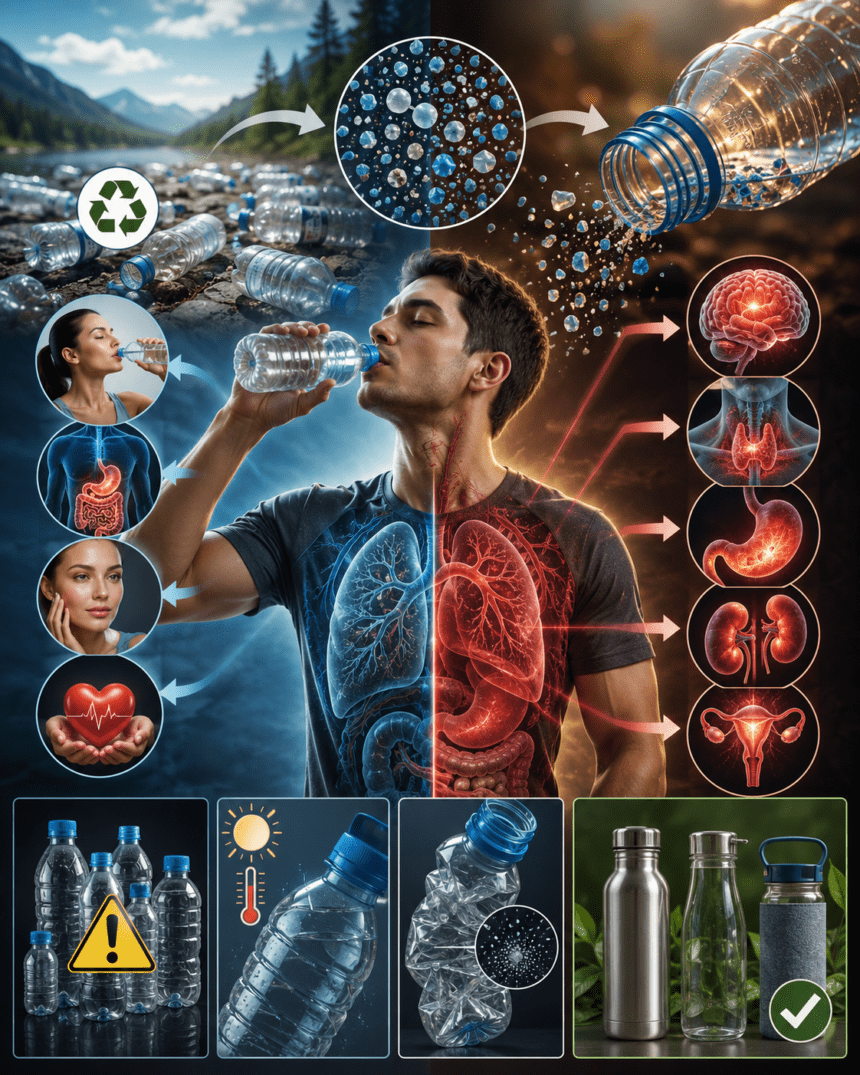
Plastic water bottles are commonly used in everyday life due to their convenience and low cost. However, regular use of these bottles—especially when exposed to heat or reused frequently—may have hidden health effects that are often ignored.
1. Chemical Contamination Risk
Plastic bottles can sometimes release small amounts of chemicals into the water. This risk increases when bottles are:
- Kept in direct sunlight
- Stored in hot environments
- Reused many times
Over time, these chemicals may mix with drinking water.
2. Possible Hormonal Effects
Some plastics contain compounds that may affect the body’s hormonal system. Long-term exposure to such substances is considered a potential health concern, although research is still ongoing.
3. Heat Exposure Makes It Worse
When plastic bottles are exposed to high temperatures, the structure of plastic can weaken. This increases the chance of unwanted substances entering the water, making it unsafe for drinking.
4. Bacterial Growth in Reused Bottles
Reusing plastic bottles without proper cleaning can lead to bacterial buildup. Tiny cracks inside the bottle can trap germs, which may cause stomach infections and digestive problems.
5. Reduced Water Quality
With repeated use, plastic bottles may start to break down, affecting the taste and quality of water. This is more common in low-quality or single-use bottles.
6. Environmental Impact
Plastic waste contributes to environmental pollution. This pollution can indirectly affect human health by contaminating water sources and soil.
Safer Alternatives
To reduce possible risks, it is better to use:
- Stainless steel bottles
- Glass bottles
- High-quality BPA-free reusable bottles
These options are safer for long-term use and more environmentally friendly.
Conclusion
Plastic water bottles are convenient but may carry hidden health risks, especially when reused or exposed to heat. Using safer alternatives and following proper hygiene can help protect overall health.