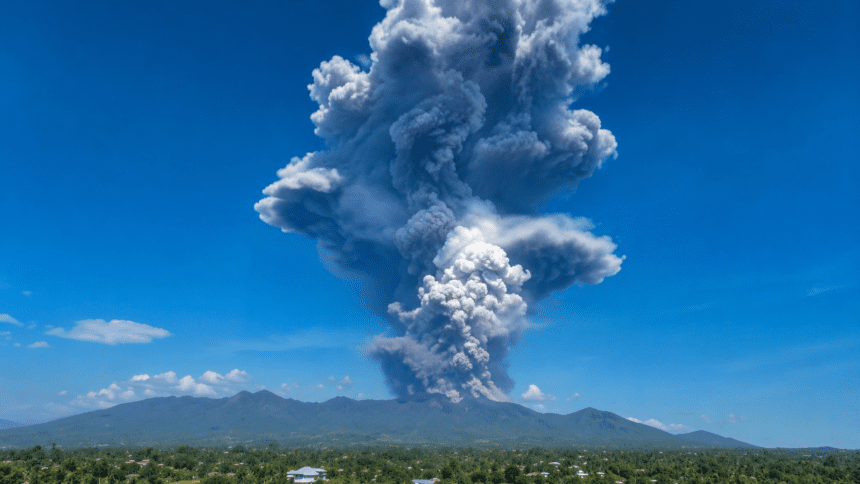
LOMBOK, INDONESIA — Mount Kawi, a stratovolcano on Indonesia’s Lombok island, erupted violently late Tuesday, killing at least three villagers and injuring dozens as an ash plume shot miles into the sky. Authorities confirmed the fatalities Wednesday morning, with rescue teams still struggling to reach remote areas blanketed in thick ash and volcanic debris.
The eruption, which began around 10:45 PM local time, sent pyroclastic flows cascading down the volcano’s eastern flank, engulfing several small hamlets. Over 5,000 residents from surrounding villages have fled their homes, seeking refuge in government-designated shelters. Hospitals on Lombok are treating 27 people for burns and respiratory issues, with at least five in critical condition.
“We didn’t have much warning,” said Wayan Susila, head of the local disaster mitigation agency. “The tremors intensified quickly, then the mountain just exploded. People ran for their lives, but some weren’t fast enough.” He confirmed the three victims were found near the village of Batu Putih, caught in the initial surge.
Indonesia’s Volcanology and Geological Hazard Mitigation Center (PVMBG) raised Mount Kawi’s alert level to its highest, “Awasi” (Caution), immediately after the eruption. They’ve established a 7-kilometer exclusion zone around the crater. Ashfall disrupted flights to Lombok International Airport for several hours Wednesday, though operations have since resumed with caution.
Mount Kawi, dormant for nearly two decades, sits on the Pacific “Ring of Fire” — a seismic belt where tectonic plates collide, leading to frequent volcanic activity and earthquakes. The region experiences hundreds of minor eruptions annually, but deadly events like this are less common. This latest eruption brings renewed focus on the precarious lives of communities living in the shadow of active volcanoes across the archipelago.
Rescue efforts continue, hampered by ongoing seismic activity and the sheer volume of ash. The government has dispatched emergency aid, including food, medical supplies, and temporary shelters. “Our immediate priority is finding anyone still trapped and ensuring the displaced have what they need,” Susila added, his voice strained. “The long-term recovery will be immense.”