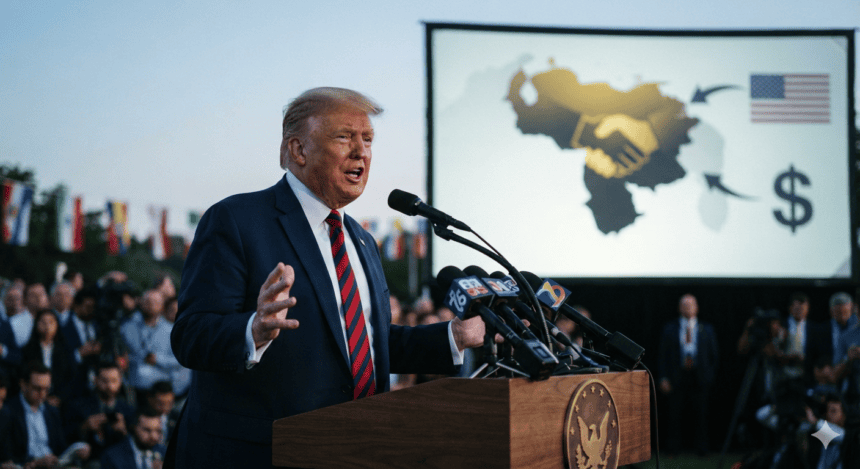
WASHINGTON — Donald Trump announced a framework agreement Tuesday to secure a majority stake in several of Venezuela’s state-owned oil fields, a move that would fundamentally realign Western energy markets and bypass years of sanctions against the Maduro regime.
The deal, negotiated through a private consortium, grants US-based energy firms primary extraction rights in the Orinoco Belt. For years, this region has remained largely untapped by Western companies due to political instability and stringent US sanctions. Trump described the arrangement as a “strategic energy victory” that would lower domestic fuel prices and insulate the US from reliance on Middle Eastern supply chains.
The shift marks a sharp departure from the “maximum pressure” campaign initiated during his first term. Critics point to the inherent risk in partnering with a government currently subject to ongoing investigations regarding human rights abuses and election integrity. By pivoting from isolation to direct investment, the administration is betting that economic entanglement will stabilize the region more effectively than diplomatic freezing.
“We aren’t just buying oil; we’re securing the future of the hemisphere,” Trump said during a briefing at Mar-a-Lago. He declined to answer questions regarding the specific financial terms or the regulatory hurdles the deal faces in Congress.
The White House has not yet clarified how it intends to reconcile this new partnership with existing executive orders that prohibit US entities from transacting with Petróleos de Venezuela, S.A. (PDVSA). Legal experts suggest this will require a complex series of waivers, potentially triggering a legislative battle as lawmakers question the optics of financing a regime previously labeled a dictatorship.
For the global energy market, the impact is immediate. Crude futures dipped within minutes of the announcement as traders priced in the potential influx of Venezuelan heavy crude into the US refining system. If the production targets are met, it would effectively neutralize the influence of OPEC+ production quotas that have constrained global supply since 2022.
The success of this venture relies entirely on the cooperation of the Maduro government, an administration that has historically used oil assets as leverage against foreign intervention. Whether this deal provides the stability the White House promises, or merely entangles the US in another volatile geopolitical cycle, remains the central question for the coming fiscal quarter.
The first shipments are slated for late next year, assuming the current regulatory framework can be dismantled in time.