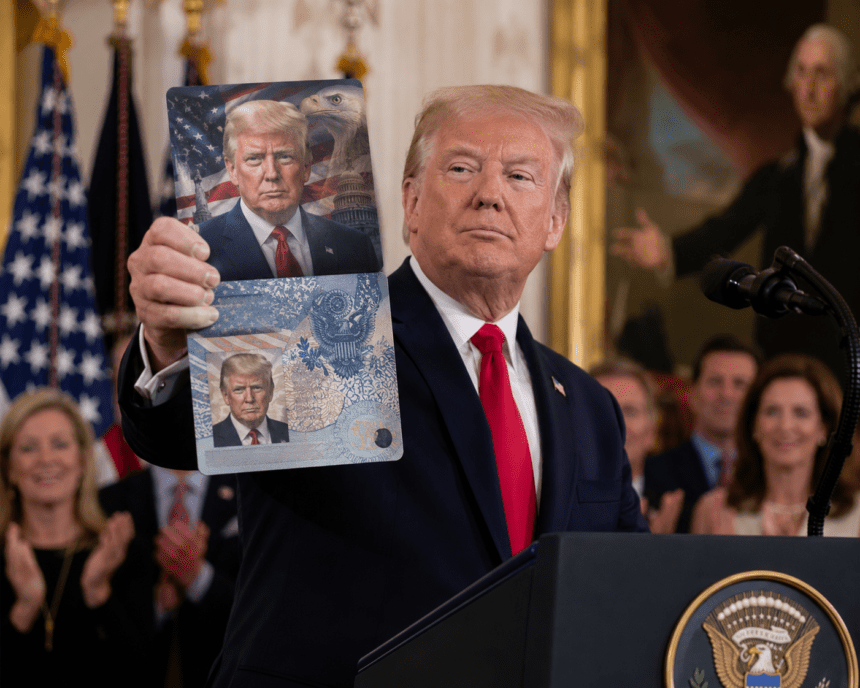
WASHINGTON — Donald Trump floated a radical redesign of the U.S. passport during a campaign rally in Pennsylvania, suggesting future travel documents should feature his own image rather than traditional American iconography.
The proposal, which drew both cheers from supporters and immediate backlash from constitutional scholars, marks another shift in how the former president views the intersection of state symbols and his personal brand.
“When you travel, you want to be recognized for the strength of your leadership,” Trump told the crowd. “We’re going to look at a new design. Maybe it’s time the world sees a face they actually know on the front of that book.”
The current U.S. passport, which features the Great Seal of the United States on its cover, has remained largely consistent in its symbolic imagery for decades. Changing the design would require an act of Congress and a massive overhaul of the State Department’s security protocols.
Legal experts were quick to point out the potential for international confusion. “Passports are diplomatic instruments representing the state, not the individual currently in power,” said Sarah Jenkins, a professor of international law at Georgetown University. “Replacing the national seal with a political figure’s likeness would essentially turn a travel document into a campaign billboard, likely creating significant friction at foreign border crossings.”
The logistics of such a change would be unprecedented. The State Department spends years developing the security features—holograms, watermarks, and biometric chips—that prevent forgery. A redesign would force the federal government to recall or phase out millions of existing documents at a cost likely reaching into the hundreds of millions of dollars.
Trump’s campaign staff did not provide details on whether this would be a permanent feature or a limited-edition document. However, the suggestion fits a broader pattern of the former president’s rhetoric regarding the ownership of government institutions.
For now, the proposal remains a campaign talking point. Whether it could survive the legislative hurdles of Capitol Hill remains a different question entirely. As one senior aide noted, “The president likes to think big, but the bureaucracy of the State Department moves at a very different pace.”