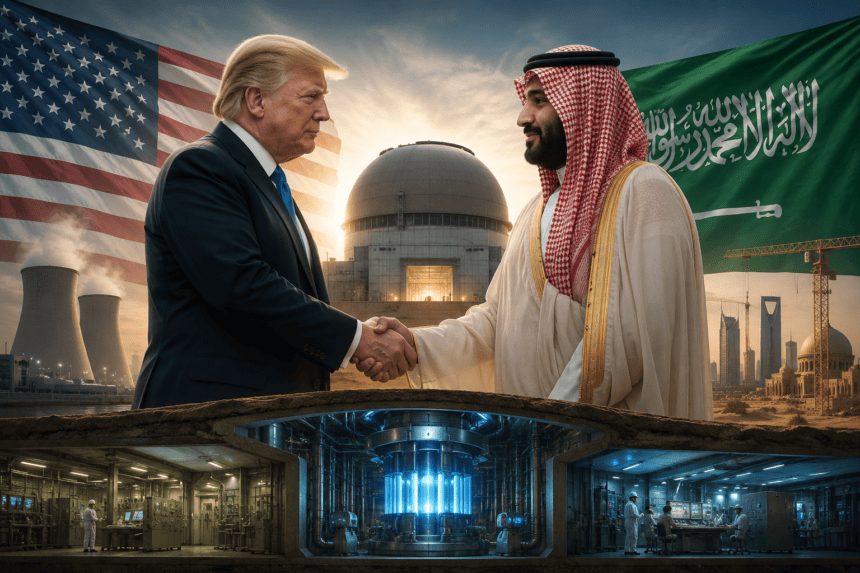
Donald Trump’s transition team is reviving a long-standing goal: a formal civil nuclear agreement with Saudi Arabia. For Riyadh, the deal is a cornerstone of its “Vision 2030” plan to diversify energy sources. For Washington, it represents a geopolitical gamble—trading nuclear technology for regional security guarantees and influence that keeps Riyadh firmly out of Beijing’s orbit.
The core of the proposed deal involves the U.S. transferring sensitive uranium enrichment technology to the Kingdom. Saudi Crown Prince Mohammed bin Salman has made his intentions clear: if Iran develops a nuclear weapon, the Kingdom will follow suit. This “nuclear hedging” is precisely what makes the deal a lightning rod for non-proliferation advocates.
The Trump administration’s approach centers on “conditional cooperation.” By positioning the U.S. as the primary partner for Saudi nuclear development, officials argue they can maintain strict oversight. The goal is a “Gold Standard” agreement—a 123 Agreement that would legally mandate the Kingdom forgo domestic enrichment and reprocessing, effectively locking them into using U.S.-supplied fuel.
However, the leverage is shifting. Saudi Arabia is no longer solely dependent on Western expertise. Negotiations have previously stalled because Riyadh refused to sign the Additional Protocol of the International Atomic Energy Agency (IAEA), which would allow for intrusive, “anytime, anywhere” inspections. Saudi officials have signaled that if the U.S. insists on restrictive terms, they will simply turn to China or Russia—partners who have historically shown little interest in attaching non-proliferation strings to their nuclear exports.
The domestic political landscape in Washington complicates the path forward. A civil nuclear deal requires Congressional approval. Skeptics on both sides of the aisle remain wary of the Kingdom’s human rights record and its past reluctance to accept the stringent oversight required by U.S. law. To push this through, the administration would likely need to bundle the nuclear deal with a broader regional security pact, including a normalization agreement between Israel and Saudi Arabia.
Critics argue that selling nuclear technology in such a volatile region is a dangerous precedent. They point out that even “civilian” programs provide the technical infrastructure and human expertise necessary to pivot toward military use if the political winds shift. Supporters, meanwhile, maintain that a U.S.-led deal is the only way to prevent a regional arms race, arguing that refusing to sell would only hand the keys to competitors who won’t demand transparency.
As the transition progresses, the focus remains on whether the administration can secure the “Gold Standard” restrictions that keep the region’s nuclear ambitions in check. If the price of the deal is a relaxation of those standards, the U.S. may find itself presiding over a new, more dangerous era of Middle Eastern nuclear proliferation. The question isn’t just whether Saudi Arabia gets the technology, but how much control Washington is willing to trade to keep its hand on the throttle.