Introduction
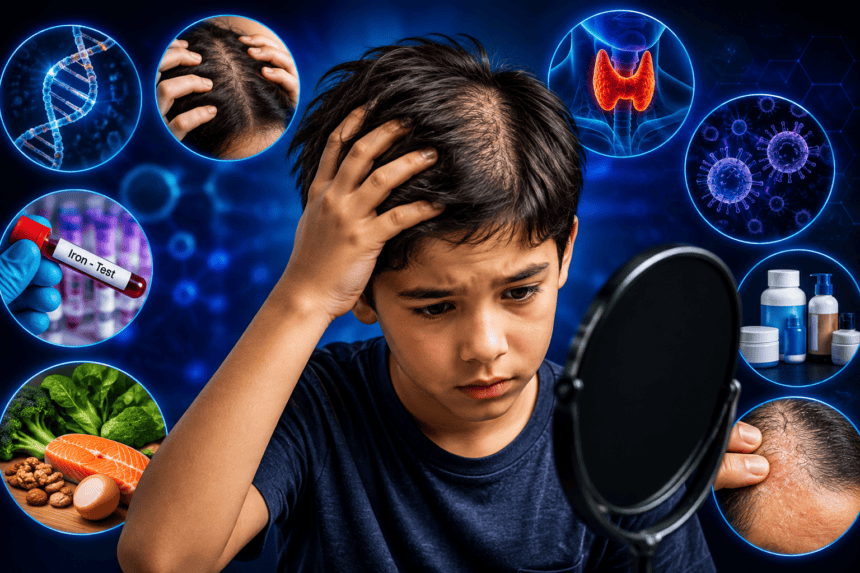
Hair loss is often associated with aging adults, but it can also occur in children and preteens. Seeing a 10- to 12-year-old boy lose hair can be alarming for both parents and the child. While finding extra hair on a pillow, comb, or bathroom floor may cause concern, hair loss in preteen boys is not always a sign of a serious medical problem.
Children normally shed 50 to 100 hairs each day as part of the natural hair growth cycle. However, noticeable thinning, bald patches, or excessive hair shedding may indicate an underlying issue that requires medical attention. Hair loss can result from nutritional deficiencies, fungal infections, autoimmune diseases, hormonal changes, stress, certain medications, or even hairstyles that put constant tension on the hair.
The good news is that many causes of hair loss in children are temporary and treatable. Identifying the underlying reason early can help restore healthy hair growth and prevent further hair loss. This article explores the most common causes of hair loss in preteen boys, symptoms to watch for, treatment options, and when parents should seek medical advice.
Is Hair Loss Normal in a Preteen Boy?
A small amount of hair shedding every day is completely normal because hair naturally goes through a cycle of growth, rest, and shedding.
Hair loss may become concerning if a child experiences:
- Noticeable thinning
- Bald patches
- Hair falling out in clumps
- A widening part
- Scalp redness or swelling
- Persistent itching
- Broken hairs
If these signs appear, it is important to identify the underlying cause.
Understanding the Hair Growth Cycle
Every hair follicle goes through three phases.
Anagen (Growth Phase)
This is the active growth stage that can last several years.
Catagen (Transition Phase)
Hair growth slows and the follicle prepares for shedding.
Telogen (Resting Phase)
Old hairs fall out naturally, allowing new hairs to grow.
When something disrupts this cycle, excessive hair shedding may occur.
Common Causes of Hair Loss in Preteen Boys
1. Fungal Scalp Infection (Ringworm)
One of the most common causes of hair loss in school-aged children is tinea capitis, commonly known as scalp ringworm.
Despite its name, ringworm is not caused by worms but by a fungal infection.
Symptoms
- Round bald patches
- Scaly skin
- Broken hairs
- Itchy scalp
- Swollen lymph nodes
Treatment usually involves prescription antifungal medication rather than medicated shampoos alone.
2. Alopecia Areata
Alopecia areata is an autoimmune condition in which the immune system mistakenly attacks healthy hair follicles.
Symptoms
- Smooth, round bald patches
- Sudden hair loss
- No pain or itching in most cases
Some children experience spontaneous hair regrowth, while others may require treatment from a dermatologist.
3. Nutritional Deficiencies
Healthy hair requires adequate nutrition.
Deficiencies in certain nutrients may contribute to hair loss.
These include:
- Iron
- Zinc
- Vitamin D
- Protein
- Vitamin B12
- Biotin (rare deficiency)
Children who eat limited diets or frequently skip meals may be at greater risk.
4. Stress and Emotional Changes
Although often overlooked, emotional stress can trigger temporary hair shedding known as telogen effluvium.
Possible stressors include:
- Family problems
- School pressure
- Bullying
- Illness
- Surgery
- Major life changes
Hair usually begins growing back once the stressful event has passed.
5. Poor Hair Care Habits
Repeated damage to the hair may lead to breakage.
Common causes include:
- Harsh shampoos
- Excessive heat styling
- Tight hairstyles
- Frequent scratching
- Rough towel drying
Gentle hair care can help prevent unnecessary damage.
6. Hormonal or Thyroid Disorders
Although less common, thyroid disorders may contribute to hair thinning.
Symptoms may include:
- Fatigue
- Weight changes
- Dry skin
- Cold intolerance
- Slowed growth
Blood tests can help diagnose thyroid-related problems.
7. Certain Medications
Some medicines may cause temporary hair shedding.
Examples include medications used for:
- ADHD
- Epilepsy
- Severe acne
- Cancer treatment
Parents should never stop prescribed medication without consulting a healthcare provider.
8. Trichotillomania
Trichotillomania is a mental health condition in which a child repeatedly pulls out their own hair.
This often occurs during periods of anxiety or emotional distress.
Treatment usually involves behavioral therapy and psychological support.
Less Common Causes
Other possible reasons include:
- Lupus
- Scalp psoriasis
- Severe eczema
- Genetic conditions
- Chronic illness
- Severe infections
These conditions are less common but should be evaluated by a healthcare professional if suspected.
Warning Signs That Need Medical Attention
Parents should seek medical advice if their child has:
- Rapid hair loss
- Multiple bald patches
- Hair loss with fever
- Red, swollen, or painful scalp
- Pus or drainage
- Hair loss lasting longer than several months
- Hair loss accompanied by weight loss or fatigue
Early diagnosis improves treatment success.
How Doctors Diagnose Hair Loss
A healthcare provider may perform:
Medical History
Questions about diet, illness, medications, and family history.
Physical Examination
The scalp and hair are carefully examined.
Hair Pull Test
A gentle pull helps determine how easily hairs fall out.
Blood Tests
These may check:
- Iron levels
- Thyroid function
- Vitamin deficiencies
- Hormone levels
Scalp Scraping or Culture
Used to diagnose fungal infections.
In rare cases, a skin biopsy may be recommended.
Treatment Depends on the Cause
There is no single treatment for childhood hair loss.
Treatment varies depending on the diagnosis.
For Ringworm
Prescription antifungal medicine.
For Nutritional Deficiencies
Balanced diet and supplements if recommended.
For Alopecia Areata
Topical medications or corticosteroid treatments may help.
For Stress-Related Hair Loss
Stress management and reassurance.
For Thyroid Problems
Treatment of the underlying thyroid disorder.
Foods That Support Healthy Hair Growth
A healthy diet plays an important role in hair health.
Include:
Protein
- Eggs
- Chicken
- Fish
- Lentils
- Beans
Iron
- Spinach
- Lean meat
- Fortified cereals
Zinc
- Pumpkin seeds
- Chickpeas
- Nuts
Vitamin C
- Oranges
- Strawberries
- Kiwi
Omega-3 Fats
- Salmon
- Sardines
- Walnuts
Vitamin D
- Fortified dairy products
- Eggs
- Safe sunlight exposure
Can Hair Grow Back?
In many cases, yes.
Hair often regrows after:
- Treating fungal infections
- Correcting nutritional deficiencies
- Recovering from illness
- Reducing stress
Some autoimmune conditions may require long-term management, but many children experience significant improvement with appropriate care.
Tips for Parents
- Avoid panic if you notice increased shedding.
- Encourage a balanced diet.
- Use mild shampoos.
- Avoid harsh chemicals.
- Don’t ignore persistent bald patches.
- Schedule a medical evaluation if hair loss continues.
- Offer emotional support, as hair loss can affect a child’s confidence.
Frequently Asked Questions (FAQs)
Is hair loss common in preteen boys?
It is less common than in adults but can occur due to infections, nutritional deficiencies, autoimmune conditions, stress, or medical problems.
Can stress cause hair loss?
Yes. Significant emotional or physical stress may trigger temporary hair shedding.
Does wearing a cap cause hair loss?
No. Wearing a clean, properly fitting cap does not cause hair loss.
Should I give my child hair vitamins?
Only if recommended by a healthcare provider. Most children obtain enough nutrients through a balanced diet.
When should parents see a doctor?
If hair loss is sudden, severe, forms bald patches, or lasts for several weeks, a medical evaluation is recommended.
Conclusion
Hair loss in a preteen boy can be upsetting, but it is often temporary and treatable once the underlying cause is identified. From fungal infections and nutritional deficiencies to stress, autoimmune disorders, and hormonal imbalances, many different factors can affect a child’s hair growth. Paying attention to accompanying symptoms, maintaining a nutritious diet, and seeking timely medical advice are key steps in protecting your child’s hair and overall health. Rather than assuming the problem will resolve on its own, parents should consult a healthcare professional if hair loss is persistent, severe, or associated with other symptoms. With early diagnosis and appropriate treatment, most preteen boys can regain healthy hair growth and confidence.