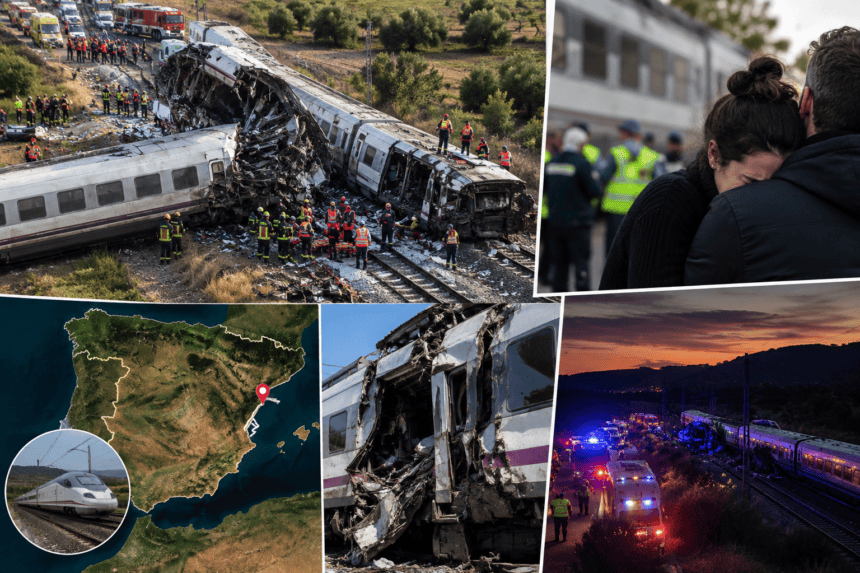
Eighty people died because a high-speed train entered a curve too fast. That is the blunt reality of Spain’s worst rail disaster in decades, an accident near Santiago de Compostela that continues to reshape the country’s approach to transit safety.
The Alvia train, traveling from Madrid to Ferrol, was carrying 218 passengers when it hurtled off the tracks at 179 kph (111 mph). The speed limit for that specific bend at A Grandeira was 80 kph. When the carriages hit the wall, the impact was so violent that one car was tossed 15 feet into the air, landing on an embankment above the track.
The Driver and the Phone Call
Francisco José Garzón Amo, the veteran driver at the controls, was on a work-related phone call with a colleague just seconds before the derailment. Investigators found he had finished the call only moments before the train hit the curve.
Garzón admitted in court that he was momentarily distracted, losing his sense of place on the line. He applied the emergency brakes, but it was too late. The train didn’t just slide; it disintegrated.
A Failure of Systems
The tragedy wasn’t just a matter of human error. It exposed a lethal gap in Spain’s rail technology. The European Train Control System (ETCS)—a sophisticated safety net that automatically slows trains exceeding speed limits—stopped several kilometers before the crash site.
On the fatal curve itself, the railway relied on ASFA, an older, less capable system that warns drivers but doesn’t always take control of the brakes. If the modern ETCS had been installed on that specific stretch of track, the crash almost certainly wouldn’t have happened.
The Legal Fallout
The trial, which concluded recently, saw Garzón and former rail safety director Andrés Cortabitarte facing charges of professional negligence. Prosecutors argued that Adif, the state-owned rail infrastructure firm, failed to properly assess the risks of the A Grandeira curve.
Victims’ families spent a decade fighting for this recognition. They argued that blaming the driver alone was a convenient way for the government to avoid admitting systemic infrastructure flaws.
The “So What?”
This crash changed how Europe views rail safety. It forced a continent-wide re-evaluation of “transition zones”—those dangerous spots where high-speed lines hand over control to older, local tracks.
Spain has since spent millions upgrading signaling across its network, ensuring that no driver is left as the sole line of defense against a high-speed catastrophe. The wreckage is gone, but the mandate for automated safety is now written in the names of the 80 who never reached Ferrol.