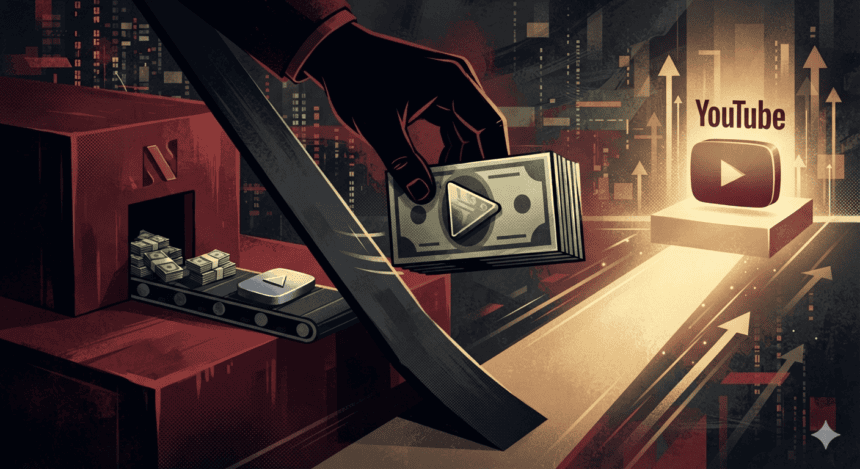
YouTube is quietly opening its checkbook to keep its biggest stars on the platform, offering multi-million-dollar deals to prevent them from moving their shows to Netflix and other streaming services.
The strategy marks a shift for the Google-owned giant. For years, YouTube served as a launchpad for creators to build audiences before migrating to more “traditional” media platforms. Now, the company is fighting to keep that talent tethered to its own ecosystem, effectively paying a premium to ensure high-budget series and documentaries stay exclusive to the YouTube player.
These deals aren’t just about loyalty. They’re a direct response to Netflix’s aggressive push into unscripted content and creator-led programming. Executives at YouTube worry that if their top-tier creators—who command loyal, multi-generational audiences—start porting their best work to Netflix, the platform will lose its status as the primary destination for original digital entertainment.
The financial incentives are substantial. Sources familiar with the negotiations describe contracts worth several million dollars per creator, contingent on keeping long-form series projects off competing streaming platforms for a set period.
It’s a defensive move that carries risks. By paying for exclusivity, YouTube is moving closer to the traditional television model it once sought to disrupt. Critics argue that this approach could stifle the platform’s organic, grassroots culture, turning it into a battleground for corporate bidding wars rather than a space for independent creators.
For the creators, the math is straightforward. A Netflix deal offers prestige, but YouTube’s offer provides immediate capital while allowing them to maintain ownership over their audience data and direct engagement—things that disappear once a show lands on a walled-garden service like Netflix.
As the lines between social media and streaming giants blur, the competition for eyeballs is becoming a competition for the people who own them. YouTube is banking on the idea that keeping the creators is cheaper than losing the audience.
Whether this keeps viewers from clicking over to Netflix remains the biggest gamble of the year.