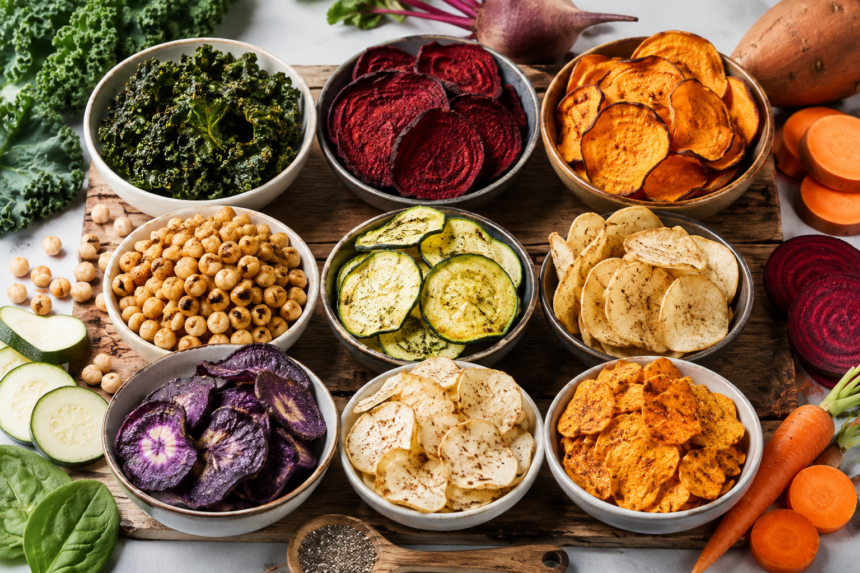
Crunchy snacks are hard to resist, and chips remain one of the most popular choices when people want something quick and satisfying. However, many conventional chips are high in sodium, calories and saturated or unhealthy fats while providing relatively few nutrients.
The good news is that choosing a healthier chip does not necessarily mean giving up the crunch. Many alternatives are made from vegetables, legumes, whole grains and other nutrient-rich ingredients.
Here are nine options worth considering.
1. Kale Chips
Kale chips can provide a lighter alternative to traditional potato chips. Kale contains fibre and several vitamins and minerals. When baked with a small amount of oil and seasoning, kale leaves become crisp and crunchy.
However, portion size and added salt still matter.
2. Beet Chips
Beets can be thinly sliced and baked into naturally colourful chips. They provide fibre and plant compounds while offering a different flavour from conventional potato chips.
Homemade versions allow you to control the amount of oil and salt.
3. Sweet Potato Chips
Sweet potatoes contain fibre and nutrients such as beta-carotene. Baked sweet potato chips can be a satisfying alternative to heavily processed snacks.
Choosing baked varieties and checking the nutrition label for sodium and added fats can make a difference.
4. Lentil Chips
Lentil-based chips are often higher in protein and fibre than traditional potato chips. They can be particularly useful for people looking for a snack that provides more nutritional value.
Still, not every lentil chip is automatically healthy, so checking the ingredient list is important.
5. Chickpea Chips
Chickpeas are naturally rich in plant-based protein and fibre. Chips made from chickpea flour can therefore provide more protein than many conventional snack chips.
They can be a good option when paired with a nutrient-rich dip such as hummus.
6. Whole-Grain Chips
Whole-grain chips may contain more fibre than products made from refined grains. Look for options where a whole grain appears near the beginning of the ingredient list.
Fibre can help support digestion and contribute to feelings of fullness.
7. Apple Chips
For people who prefer a naturally sweet snack, apple chips can provide a crunchy alternative. They are made by thinly slicing apples and drying or baking them.
Choose versions without added sugar whenever possible.
8. Carrot Chips
Carrots can also be baked or dehydrated to create a crunchy snack. They provide beta-carotene and other nutrients while naturally containing less sodium than many packaged savoury chips.
9. Air-Popped Potato Chips
Potatoes themselves are not necessarily unhealthy. The problem often comes from how chips are processed and prepared. Air-popped or lightly baked potato chips with limited added oil and sodium can be a better choice than heavily fried varieties.
What to Check on the Label
When buying healthier chips, look beyond words such as “natural” or “healthy.” Check:
- Sodium content
- Added sugars
- Saturated fat
- Serving size
- Fibre
- Protein
- Ingredient list
A product made from vegetables or legumes can still be high in sodium or calories.
Bottom Line
Healthy snacking is not about completely avoiding crunchy foods. Instead, choose options made with nutrient-rich ingredients, keep portions reasonable and limit products that contain excessive sodium, added sugars or unhealthy fats.