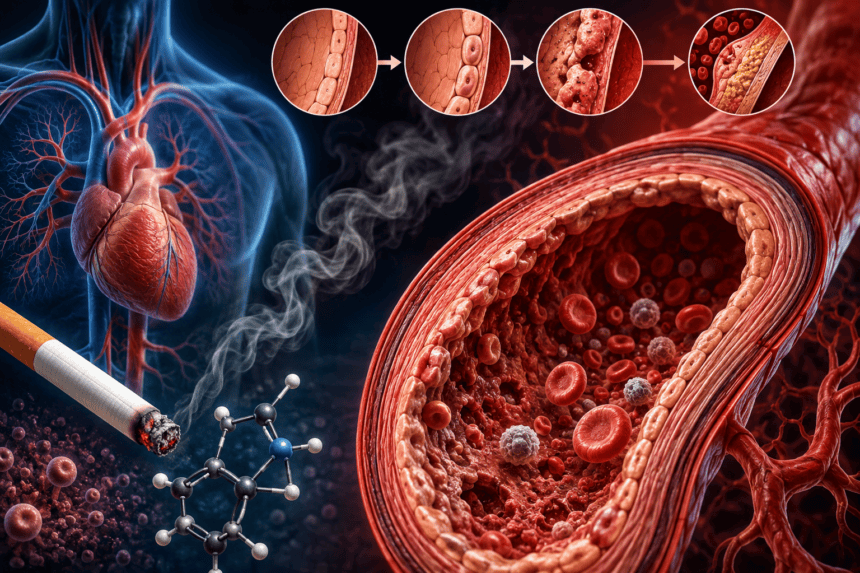
Nicotine is widely known for its addictive effects, but its impact on the body goes far beyond dependence. Whether it enters the body through cigarettes, vaping products, nicotine pouches or other sources, nicotine can interact with the cardiovascular system and influence the way blood vessels function.
Blood vessels are responsible for carrying oxygen-rich blood and nutrients throughout the body. Healthy arteries can expand and contract according to the body’s needs, helping maintain normal blood pressure and circulation. Nicotine can interfere with these processes, potentially placing additional stress on the cardiovascular system.
How Nicotine Affects Blood Vessels
One of nicotine’s immediate effects is stimulation of the body’s sympathetic nervous system, which is involved in the “fight-or-flight” response. This can cause the heart to beat faster and blood pressure to rise.
Nicotine can also cause blood vessels to narrow, a process known as vasoconstriction. When vessels become narrower, the heart has to work harder to move blood through the circulatory system. Repeated exposure can therefore contribute to ongoing cardiovascular stress.
Effects on Blood Flow
When blood vessels constrict, blood flow to certain parts of the body can temporarily decrease. This can be particularly concerning for people who already have cardiovascular risk factors.
Nicotine exposure may also affect the endothelium, the thin layer of cells lining the inside of blood vessels. Healthy endothelial cells help regulate blood flow and maintain the flexibility of arteries. Damage or dysfunction in this lining can contribute to the development of cardiovascular disease.
Nicotine and Blood Pressure
Nicotine can temporarily raise blood pressure and heart rate. For people who use nicotine repeatedly throughout the day, the cardiovascular system may be exposed to repeated periods of increased stimulation.
High blood pressure is itself a major risk factor for heart disease, stroke and other vascular complications. Although cardiovascular harm from smoking is caused by many chemicals in tobacco smoke—not nicotine alone—nicotine still has important cardiovascular effects.
Why Vaping Is Not Risk-Free
Some people assume that switching from cigarettes to vaping eliminates cardiovascular concerns. Although vaping generally exposes users to fewer toxic combustion products than traditional cigarette smoking, nicotine-containing e-cigarettes can still affect blood vessels and cardiovascular function.
The long-term effects of newer nicotine-delivery products are still being studied. However, the absence of tobacco smoke does not mean that nicotine itself has no biological effects.
The Bigger Picture
Cardiovascular harm develops through several interconnected pathways. Changes in blood pressure, heart rate, vascular tone and endothelial function can interact with other factors such as inflammation, cholesterol, diabetes, physical inactivity and smoking-related toxic exposure.
Understanding this biological hierarchy helps explain why nicotine exposure should not be viewed simply as an addiction issue. It can also have meaningful effects on the cardiovascular system.
Bottom Line
Nicotine can cause blood-vessel constriction, increase heart rate and blood pressure, and interfere with normal vascular function. Reducing or avoiding nicotine exposure can therefore be an important part of protecting cardiovascular health, particularly for people already at increased risk of heart disease.