By using this site, you agree to the Privacy Policy and Terms of Use.
Accept
Media HydeMedia Hyde
  • Home
  • Politics
  • Education
  • Entertainment
  • Sports
  • Blogs
  • Business & Commerce
  • Others
    • Religious
    • Metropolitan
    • Climate and Weather
Font ResizerAa
Media HydeMedia Hyde
Font ResizerAa
  • Home
  • Politics
  • Education
  • Entertainment
  • Sports
  • Blogs
  • Business & Commerce
  • Others
    • Religious
    • Metropolitan
    • Climate and Weather
Follow US
© 2026 Media Hyde Network. All Rights Reserved.
Headlineinternational

Journalist Recalls Israeli Strike That Killed Amal Khalil in Southern Lebanon

Last updated: April 24, 2026 1:42 am
Haris Ali
Share
SHARE

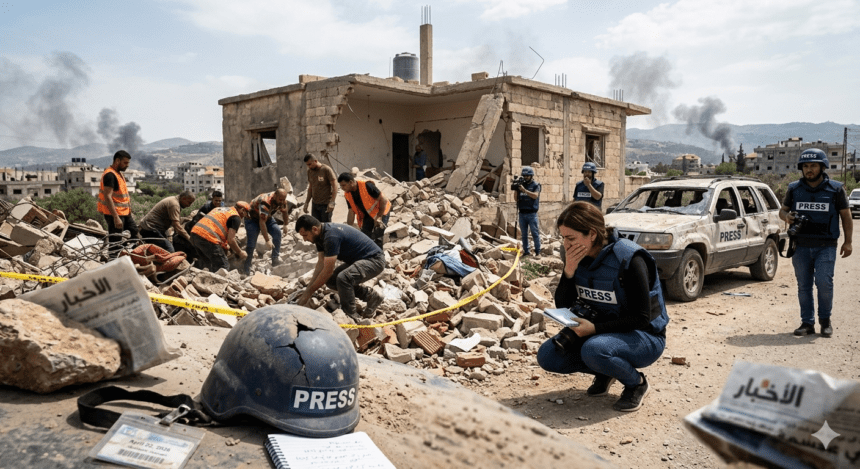
BEIRUT — A Lebanese journalist has described the moments surrounding an Israeli strike in southern Lebanon that killed reporter Amal Khalil, an incident that has drawn condemnation from press freedom organizations and renewed concerns over journalist safety in conflict zones.

Khalil, a correspondent for the Lebanese newspaper Al-Akhbar, was killed on April 22, 2026, in the village of al-Tiri after taking shelter in a house following an earlier strike nearby, according to the Associated Press, the Committee to Protect Journalists (CPJ) and the International Federation of Journalists (IFJ).

Reports from Al Jazeera and other media outlets said Khalil had been covering Israeli demolitions and military activity in southern Lebanon when the strikes occurred. Her colleague, Zeinab Faraj, was injured in the same incident. After an initial strike landed near their vehicle, the journalists reportedly moved into a nearby house for shelter, where a second strike later hit the building.

The second strike trapped Khalil under rubble. Rescue operations were delayed due to continued shelling in the area, according to AP and press freedom groups. CPJ and IFJ said efforts to recover her body were hampered by ongoing security conditions.

Press freedom organizations strongly condemned the incident. The CPJ said it was “outraged” by the killing of journalists, while the IFJ called for accountability and protection for media workers operating in conflict zones. AP reported that Khalil had been working with Al-Akhbar since 2006.

Israeli authorities, according to AP, said individuals in the area had violated a ceasefire and denied targeting journalists or obstructing rescue efforts. The circumstances of the strike remain under dispute.

The incident comes amid intensified Israeli military activity in southern Lebanon and increasing risks faced by journalists covering the conflict. AP reported that at least nine journalists have been killed in Lebanon this year, underscoring growing concerns about media safety in the region.


Share This Article
Email Copy Link Print
Previous Article U.S. to Merge Offshore Drilling and Seabed Mining Oversight in Major Regulatory Shake-Up
Next Article Instagram Stories Hit by Glitches, No Major Outage Confirmed
Leave a Comment

Leave a Reply Cancel reply

Your email address will not be published. Required fields are marked *

Sponsored Ads

Stay Connected

FacebookLike
XFollow
InstagramFollow
YoutubeSubscribe
WhatsAppFollow
ThreadsFollow
‘Murder, She Wrote’ Film Set for December 2027 Release, No Confirmed Delay to 2028
Entertainment
April 24, 2026
Here’s Where to Watch the 2026 NFL Draft Online for Free
Entertainment
April 24, 2026
Netflix Scripted Series Head Jinny Howe Set to Keynote at Banff World Media Festival
Entertainment
April 24, 2026
Netflix’s Jinny Howe tapped for Banff keynote as festival sharpens focus on streaming-era TV
Entertainment
April 24, 2026
Ari Emanuel’s TKO Pay Falls to $18.1 Million in 2024, SEC Filing Shows
Entertainment
April 24, 2026
Instagram Stories Hit by Glitches, No Major Outage Confirmed
Headline Technology
April 24, 2026

You Might Also Like

WASHINGTON/ISLAMABAD: President Donald Trump said the ceasefire with Iran could remain in place until Tehran submits proposals and negotiations are wrapped up, though the latest reporting suggests the truce is still shaky and could unravel quickly if talks stall. AP reported Tuesday that the current two-week ceasefire was due to expire Wednesday, with U.S. and Iranian officials signaling possible new talks in Islamabad even as both sides warned they were ready to resume fighting without a deal. The line from Trump adds a bit of breathing room, at least on paper. CBS reported that he indicated the ceasefire would continue until discussions are concluded, but the same round of coverage also showed growing uncertainty over whether Iran would actually send a delegation for the next phase of talks in Pakistan. By Tuesday evening in Pakistan, officials were still waiting for formal confirmation from Tehran. That uncertainty has become the real story now. While Trump has publicly said senior U.S. officials, including Vice President JD Vance and envoy Steve Witkoff, are heading to Pakistan for another possible round of negotiations, Iranian officials have pushed back against the idea of negotiating under pressure. Recent reporting says Tehran has not officially confirmed participation, and Iranian public messaging has stressed that talks cannot proceed under threats or coercion. Pakistan, meanwhile, has emerged as the central mediator in this phase of the crisis. Multiple recent reports say Islamabad has been trying to keep the ceasefire alive and host a second round of U.S.-Iran talks, following earlier efforts that helped open a diplomatic channel after the fighting. That mediation role has given Pakistan unusual visibility in a conflict that has rattled the wider region and raised fears over shipping and energy security. Still, nobody seems to be pretending this is settled. AP described the talks as uncertain on the eve of the ceasefire deadline, while other live updates showed that the next meeting could be delayed or even collapse if Iran refuses to attend. That leaves Trump’s statement looking less like a firm peace breakthrough and more like a conditional extension: the guns stay quiet a little longer, but only if diplomacy starts moving. The main pressure point remains whether Tehran will put forward terms both sides can work with. Earlier reporting said Trump had treated an Iranian 10-point plan as a possible basis for negotiations, but key sticking points remain unresolved, including broader security demands and the terms of any longer-term settlement. So for now, the ceasefire is alive, yes, but it’s living hour to hour. That is why Trump’s latest remark matters. It signals he is willing to keep the pause in place a bit longer, yet it also makes clear that Washington wants something concrete from Tehran, not just more delay. Whether Iran responds with proposals, or with another refusal, will probably decide whether this fragile ceasefire becomes a negotiation track or slips back into open conflict.
international

Trump says Iran ceasefire can continue, but only until Tehran puts forward proposals

By
Mabruka Khan
Headline

PM Forms High-Level Committee to Monitor Oil Prices Amid Regional Tensions

By
Hamna Raees
HeadlinePolitics

President Asif Ali Zardari Meets King Hamad bin Isa Al Khalifa in Bahrain

By
Fatima Nadeem
Headline

Uzma Khan Allowed to Meet PTI Founder in Adiala Jail

By
Aiza Uddin
Media Hyde Media Hyde Dark
Facebook Twitter Youtube Rss Medium

About US

Media Hyde Network: Your instant connection to breaking stories and live updates. Stay informed with our real-time coverage across politics, tech, entertainment, and more. Your reliable source for 24/7 News.

Top Categories
  • Headline
  • Politics
  • Entertainment
  • Education
  • Sports
  • Religious
  • Metropolitan
  • Climate and Weather
Usefull Links
  • Contact Us
  • Disclaimer
  • Privacy Policy
  • Cookies Policy
  • Advertising Policy
  • Terms & Conditions

© 2025 Media Hyde Network. All Rights Reserved.

Welcome Back!

Sign in to your account

Username or Email Address
Password

Lost your password?