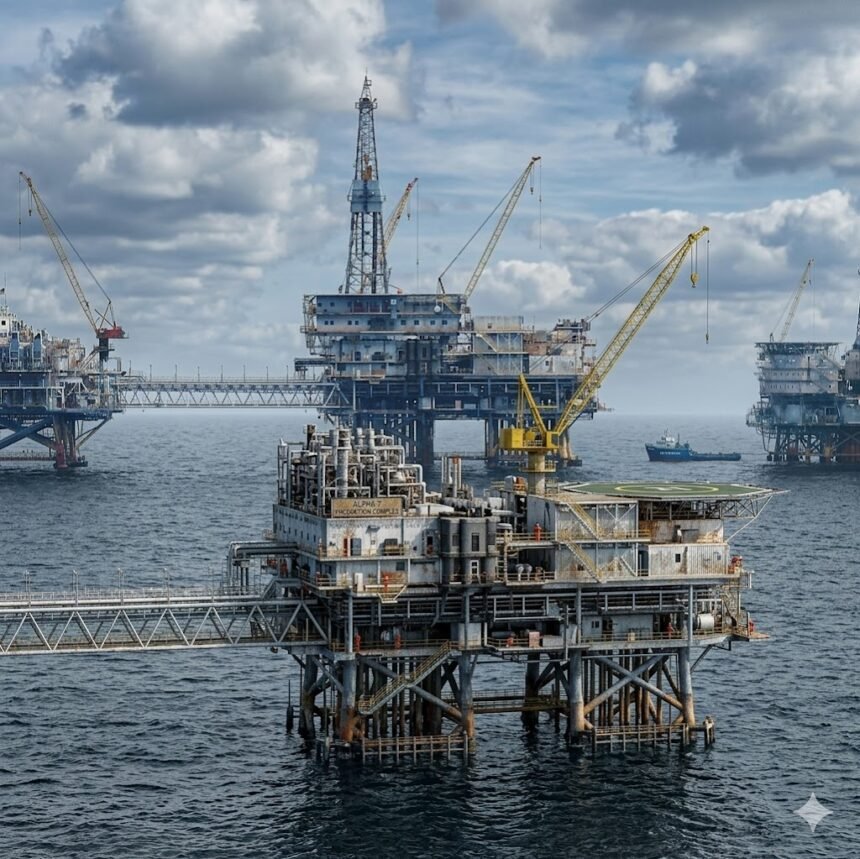
WASHINGTON — The Trump administration is moving to merge oversight of offshore oil and gas drilling with seabed mineral development under a newly created federal structure called the Marine Minerals Administration (MMA), according to Interior Department plans and budget documents.
The restructuring would combine the functions of the Bureau of Ocean Energy Management (BOEM) and the Bureau of Safety and Environmental Enforcement (BSEE) into a single agency responsible for offshore energy leasing, safety oversight, and marine mineral development.
Officials say the move is intended to streamline offshore regulation, reduce duplication, and improve coordination across permitting, inspections, and leasing decisions in U.S. waters.
The plan reverses a 2011 reform introduced after the 2010 Deepwater Horizon oil spill, when the former Minerals Management Service was split into separate agencies to address conflicts between revenue collection, leasing, and safety enforcement. That restructuring was widely seen as a response to failures exposed during the Gulf of Mexico disaster.
The new framework would also expand federal oversight of critical mineral exploration on the seabed, an area the administration has prioritized as part of broader efforts to strengthen domestic supply chains for materials used in energy and technology sectors.
According to Interior Department documents, the combined agency would manage both traditional offshore oil and gas development as well as emerging marine mineral activities, including exploration and potential commercial recovery.
Supporters of the restructuring argue that fragmented oversight slows permitting and creates inefficiencies in offshore development. They say a unified agency could speed up decision-making while maintaining environmental safeguards.
However, critics warn that merging environmental enforcement and resource development functions could recreate structural conflicts of interest similar to those that existed under the former Minerals Management Service, which was dissolved following the Deepwater Horizon spill.
The policy shift comes amid growing U.S. interest in seabed mining and offshore critical minerals, which Washington views as strategically important for reducing dependence on foreign supply chains.
The proposal is expected to face scrutiny from environmental groups and policymakers concerned about offshore safety standards and the long-term ecological risks of deep-sea mining.