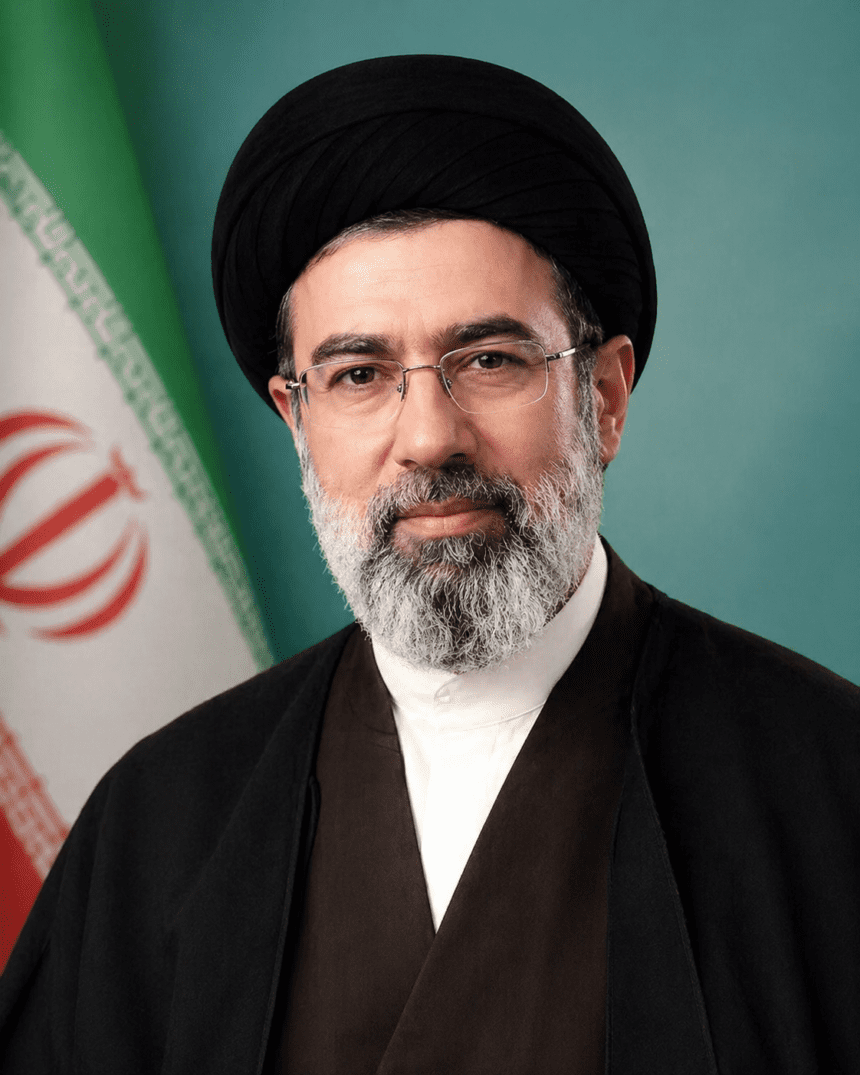
Iran’s Supreme Leader Ayatollah Mojtaba Khamenei struck a sharply defiant tone on Thursday, saying Tehran would protect its “nuclear and missile capabilities” and declaring that the United States has no place in the Persian Gulf “except at the bottom of its waters,” as a fragile ceasefire gave way to a deeper standoff at sea. His message came as a U.S. naval blockade continued to squeeze Iranian oil exports and tensions around the Strait of Hormuz kept global markets on edge.
The statement, delivered in writing and read out on Iranian state television, was timed to Persian Gulf Day and appeared aimed at drawing a clear red line around the issues Washington wants folded into broader talks with Tehran. Khamenei said Iranians view the country’s technological and military programs as national assets and would defend them just as they defend Iran’s land, waters and airspace.
His remarks landed at a moment when the military conflict may be cooling on paper, but the economic confrontation is getting harsher. According to the Associated Press, the U.S. blockade is designed to stop Iran from selling oil, cutting off a major source of revenue. At the same time, Iran has maintained pressure around the Strait of Hormuz, the narrow waterway through which roughly a fifth of globally traded crude oil and gas normally passes.
That pressure is now rippling far beyond the Gulf. Brent crude touched about $126 a barrel on Thursday, with multiple outlets describing the surge as one of the sharpest market signals yet that traders see no quick diplomatic exit. Reuters also reported that Iran warned any renewed U.S. attacks would be met with “long and painful strikes” on American positions, a threat that adds another layer of risk to efforts to reopen shipping lanes and stabilize energy supplies.
Khamenei also appeared to signal that Tehran intends to keep asserting control over the Strait of Hormuz. In the AP account, he said Iran’s “legal rules and new management” of the strait would benefit the region, even as Gulf Arab states and other governments continue to reject any attempt to treat the passage as something Tehran can unilaterally police or price.
The latest exchange shows how far the confrontation has shifted from airstrikes and battlefield headlines to economic warfare, shipping pressure and strategic signaling. Iran’s President Masoud Pezeshkian separately said the U.S. naval blockade was “doomed to fail,” arguing it would only deepen disruption across the Gulf rather than force Tehran into submission. That leaves both sides publicly sounding tougher, even while the wider region waits to see whether diplomacy still has any room left.
There is also important recent context behind Khamenei’s prominence. Reporting from AP and other outlets identifies Mojtaba Khamenei as Iran’s current supreme leader following the death of his father, Ali Khamenei, earlier in the conflict, a succession that has reshaped the tone of Iran’s public messaging during this crisis.