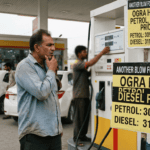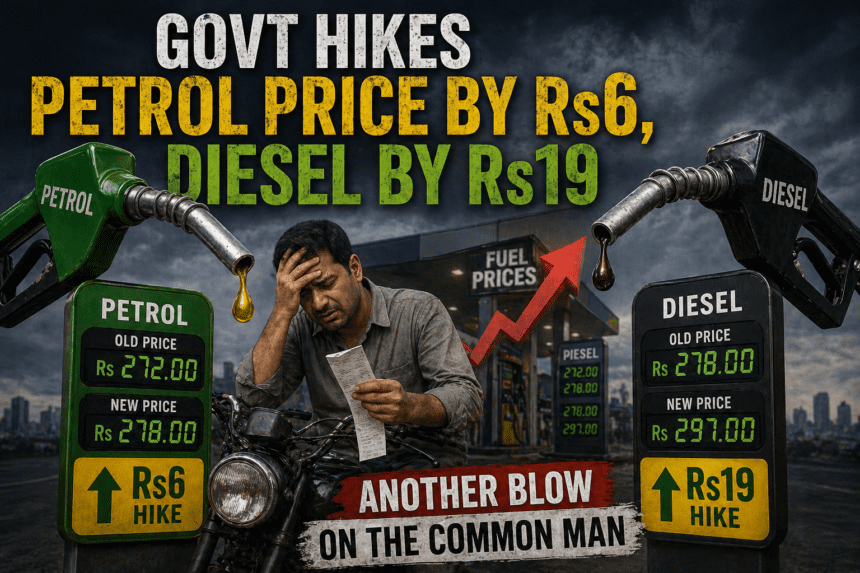
Pakistan’s government has raised the price of petrol by Rs6.51 per litre and high-speed diesel by Rs19.39 per litre, deepening pressure on households, transporters and businesses already dealing with elevated costs. Under the revised rates effective May 1, 2026, petrol has moved up to Rs399.86 per litre, while diesel now stands at Rs399.58 per litre.
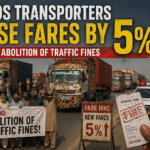
The sharper increase in diesel is especially significant because it feeds directly into the cost of goods movement, agriculture and heavy transport. In Pakistan, diesel is widely used by trucks, buses, farm machinery and parts of the industrial supply chain, so a jump of this size is likely to ripple through freight charges and, sooner or later, consumer prices. That is usually where the real economic impact starts to bite.
The latest adjustment also continues a pattern of frequent fuel revisions, with reports indicating that the government has shifted to shorter review periods because of volatile global oil markets. That means consumers and businesses are now facing not only higher prices, but also more uncertainty about what comes next.
The increase comes at a difficult moment for the wider economy. Any rise in fuel prices tends to push up transport costs first, then food delivery, intercity travel and distribution expenses. Diesel, in particular, has an outsized effect because it sits at the heart of commercial movement. For traders and manufacturers, that can mean another round of cost adjustments. For ordinary families, it often means higher prices without any real warning.
Officials also pushed back against speculation surrounding the announcement. Current reporting noted that the revised rates were issued through a Petroleum Division notification, while authorities separately rejected rumours of petrol pump closures or supply disruptions. That helped calm some of the immediate market anxiety, though the price shock itself remains.
For now, the headline is simple but heavy: petrol is nearing the Rs400 mark, diesel has effectively reached it, and the burden of that increase is unlikely to stay confined to fuel stations. It will move outward — onto roads, into markets and eventually into household budgets across the country.