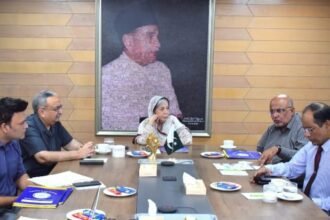
Four women from Azad Jammu and Kashmir have claimed top spots in the 2025 Central Superior Services (CSS) examinations, marking a historic shift in the region’s representation within the country’s premier civil service. While the national results typically see a balanced struggle for top-tier allocations, this year’s data shows candidates from AJK shattering regional benchmarks.
The results, released by the Federal Public Service Commission (FPSC) this week, highlight a trend that local observers have been tracking for years: the rising educational attainment of women in remote administrative districts. These four individuals didn’t just pass; they secured high-merit allocations in the prestigious Pakistan Administrative Service (PAS) and Police Service of Pakistan (PSP), traditionally the most competitive segments of the exam.
The shift carries significant weight for AJK. Historically, the region has struggled with limited access to elite preparatory coaching centers, which are concentrated in Islamabad and Lahore.
These candidates, however, bypassed the need for expensive urban academies, relying instead on self-study and digital resources. “It’s no longer about who has the best mentor in Islamabad,” said one educational consultant familiar with the regional results. “It’s about access to information and a shift in cultural priorities. Families in Muzaffarabad and Mirpur are investing as much in their daughters’ careers as they once did exclusively for their sons.” For these women, the win is personal, but the impact is systemic.
The civil service has long been criticized for its gender imbalance at the senior decision-making levels. By securing these spots, they aren’t just filling vacancies—they are entering the rooms where policy is drafted.
The FPSC’s latest statistics reveal that while the overall pass rate for the CSS remains notoriously low—often hovering below 3% the success rate for female candidates from smaller regions has climbed steadily over the last three cycles. This year’s cohort from AJK serves as proof that the “glass ceiling” in the civil service is cracking, not through policy quotas, but through sheer merit.
As these four women prepare for their mandatory training at the Civil Services Academy, they leave behind a new standard for aspirants in their home districts. Their success suggests that the next generation of civil servants won’t just look different they’ll come from places the establishment has long overlooked.