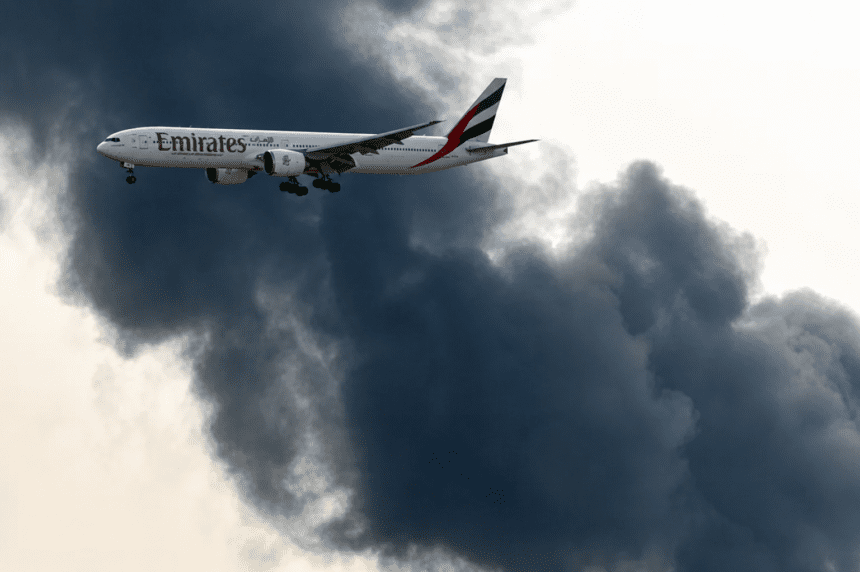
The United Arab Emirates has lifted all air traffic restrictions introduced during the regional conflict linked to Iran, with authorities saying normal flight operations have now resumed across the country after a review of security and operating conditions. Recent reporting says the move ends a period of disruption that had weighed on airlines, airports and passengers using the UAE as a major global transit hub.
The restrictions were brought in after the conflict triggered serious instability in Middle Eastern airspace, forcing airlines to cancel flights, reduce schedules, reroute aircraft and rely on tightly controlled “safe air corridors.” During that period, UAE authorities allowed only limited traffic in some corridors, with reports saying capacity had been managed at around 48 flights an hour to keep essential movement going while risks were assessed.
For travellers, the announcement is more than a technical update. Dubai and Abu Dhabi sit at the center of long-haul travel between Asia, Europe and Africa, so even short-lived disruption in the UAE tends to ripple across global schedules. Earlier coverage showed that major airlines in the region, including Emirates and Etihad, had been forced to scale back normal commercial operations as the airspace crisis deepened, leaving large numbers of passengers stranded or rebooked.
The return to full operations suggests that Emirati authorities now believe the immediate aviation risk has eased enough to remove the precautionary measures that had been in force since late February. Still, the recovery is unlikely to feel instant everywhere. Airlines usually need time to fully restore aircraft rotations, crew planning and passenger bookings after a shock like this, even when official restrictions are removed. That makes this a clear turning point, though probably not the final chapter in the region’s aviation reset.
In practical terms, the UAE’s decision is also a signal to the wider market. The country’s airports are among the busiest in the world for international transit, and the reopening of unrestricted traffic will matter not just to tourists and business travellers, but also to cargo operators and supply chains that depend on Gulf connectivity. After weeks of caution, diversions and partial resumptions, the message now is simple: the UAE wants the world to know its skies are open again.