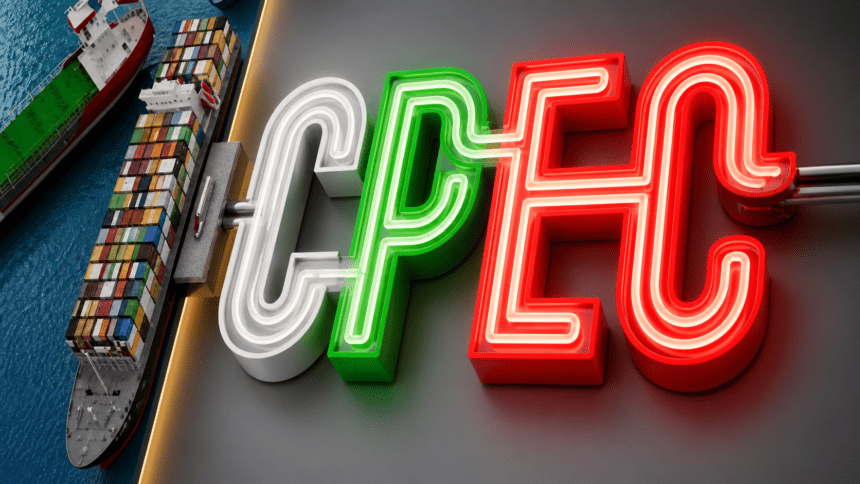
Pakistan is trying to rewrite the story of its Special Economic Zones, but the awkward part is hard to ignore: many of the zones that were supposed to become the industrial backbone of CPEC never took off on schedule, and now the government is pitching a broader, export-driven reset under Phase II. Official CPEC and Board of Investment material shows that nine SEZs were originally identified under the corridor, with early emphasis on priority sites such as Allama Iqbal Industrial City, Rashakai and Dhabeji. Years later, the rollout remains patchy enough that even supportive policy reviews describe the programme as falling well short of its original promise.
That shift in tone is now unmistakable. In January 2026, officials briefing Investment Minister Qaiser Ahmed Sheikh said the number of approved SEZs had risen from 7 in 2019 to 44 by 2025, framing the expansion as part of CPEC Phase II, or CPEC 2.0. The pitch is no longer just about roads, power plants and ribbon-cutting. It is about export-oriented manufacturing, technology transfer, value addition and industrial cooperation meant to plug Pakistan into regional and global supply chains. That’s the new vocabulary, and frankly, it tells you a lot about what the first phase didn’t fully deliver.
The problem for Islamabad is that ambition has repeatedly run into execution. Independent assessments over the past year have pointed to familiar bottlenecks: weak investor uptake, poor coordination between federal and provincial bodies, infrastructure gaps inside or around the zones, financing constraints, and the broader drag of political and economic instability. One recent review argued that the industrial and export-diversification phase of CPEC “never truly began” in the way policymakers had once imagined. Another noted that attracting foreign direct investment and turning SEZs into engines of export growth remains a stubborn challenge, not a solved one.
That matters because SEZs were never supposed to be a side project. They were meant to be the bridge between CPEC’s infrastructure-heavy first decade and a more durable second chapter built on manufacturing, jobs and exports. Pakistan’s own long-term CPEC planning documents make that logic clear: industrial cooperation was supposed to sit alongside connectivity, not trail years behind it. Yet in practice, the corridor’s visible wins came mostly in transport and energy, while the industrial piece moved slowly and, at times, unevenly.
Now the government is trying to catch up by widening the map. The Board of Investment’s SEZ framework lists a far larger universe of approved and proposed zones than the original CPEC slate, suggesting policymakers want more geographic spread, more sector-specific targeting and, ideally, quicker private-sector participation. Officials have also leaned more heavily on business-to-business engagement and industrial matchmaking with Chinese firms, a sign that state-led announcements alone are no longer enough to convince investors.
Still, none of this unfolds in a vacuum. Pakistan signed fresh China-linked investment agreements worth about $8.5 billion in September 2025, underscoring that both sides are still publicly committed to the corridor. But the operating environment remains complicated. Security concerns, payment disputes, investor caution and local infrastructure breakdowns have all, in different ways, undercut confidence. Earlier reporting from northern Pakistan, where protests over power outages disrupted a key trade artery to China, was a reminder that trade corridors and industrial policy are only as credible as the systems supporting them on the ground.
So the headline writes itself, really. Pakistan did miss the SEZ targets that once sat at the heart of CPEC’s industrial promise. What comes next is a refocus, not a victory lap. Phase II is being sold as an export-led correction: more zones, more manufacturing, more integration into supply chains. Whether that becomes a genuine turnaround or just another repackaging of old ambitions will depend on something far less glamorous than policy language — execution, investor confidence and the basic ability to make these zones work in the real world.