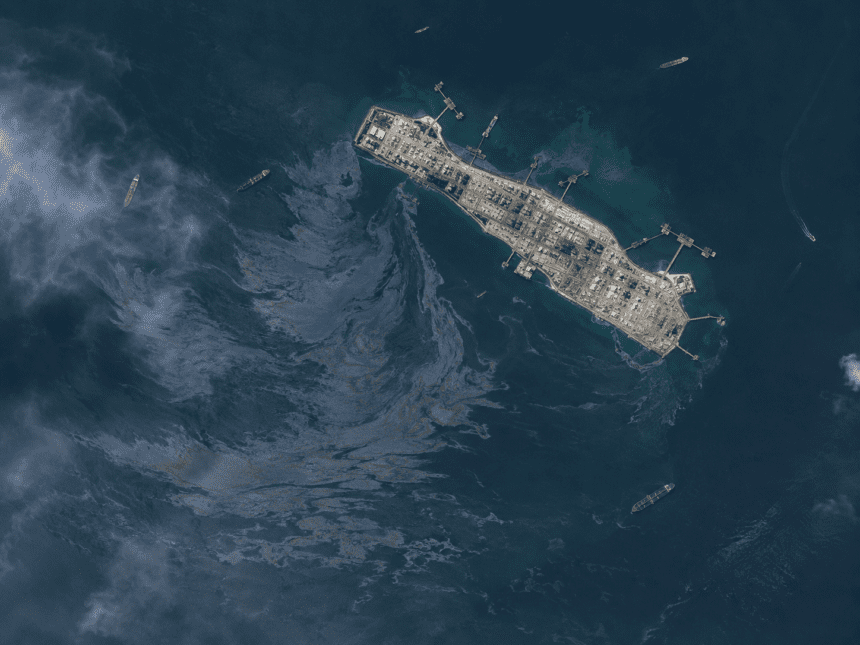
Satellite imagery has detected a significant oil slick spreading off the coast of Kharg Island, the critical terminal handling over 90% of Iran’s crude exports. The spill, identified in the Persian Gulf’s northern waters, raises immediate concerns over both environmental damage and the integrity of Iran’s aging energy infrastructure.
The slick appeared earlier this week near the island’s western loading jetties. Preliminary data suggests the patch covers several kilometers, moving southeast with the current. While Iranian authorities haven’t officially declared the volume of the leak, local maritime reports indicate the source may be a subsea pipeline failure—a recurring issue for the sanctioned terminal.
The stakes are high for Tehran. Kharg Island is the lifeblood of the Iranian economy; any disruption to its loading capacity directly hits the country’s primary source of hard currency. Global oil markets, already sensitive to Middle East volatility, are tracking the development for signs of export delays.
Environmentalists warn the Persian Gulf’s ecosystem is particularly vulnerable. The shallow, warm waters mean oil breaks down differently here, often settling into sensitive coral reefs and seagrass beds that support local fisheries.
Decades of international sanctions have left Iran’s oil infrastructure brittle. Maintenance at Kharg is often a patchwork job, relying on domestic parts and aging Soviet-era or Western technology that hasn’t been properly overhauled in years. This isn’t the first leak this year, but the scale of the current slick visible from space suggests a more serious breach than usual.
Cleanup vessels were spotted near the island on Wednesday, though their progress remains unclear. Iranian state media has remained largely silent on the incident, a standard response to industrial accidents at strategic sites.
The spill remains active. If the leak isn’t contained within the next 48 hours, the slick threatens to reach the coastal waters of Bushehr, home to both a major port and Iran’s only civilian nuclear power plant.