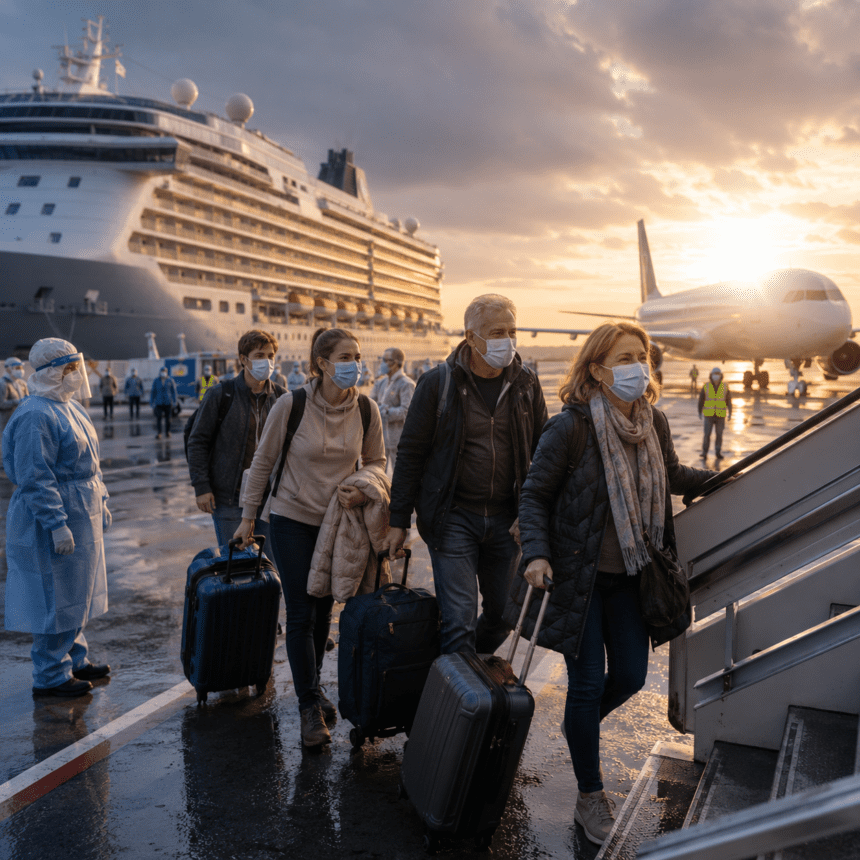
The first group of passengers stepped off the Diamond Princess in Yokohama today, ending a harrowing two-week quarantine that turned a luxury vacation into a floating isolation ward.
For the 441 people cleared to leave, the ordeal isn’t just over; it’s a moment of profound relief. They walked down the gangway, clutching their belongings and wearing masks, toward a fleet of waiting buses. Most headed straight for airports, desperate to return to countries that have spent days negotiating their evacuation.
Japanese health officials cleared these passengers after they tested negative for COVID-19 and showed no symptoms. But the ship remains a site of global concern. More than 600 people on board have tested positive for the virus, and the vessel’s ventilation system and cramped quarters have fueled questions about whether the quarantine strategy actually made things worse.
“It’s been a prison,” said one passenger, who spoke briefly to reporters before boarding a bus. “The uncertainty was the hardest part. You didn’t know if the person in the next cabin was sick, or if the air conditioning was circulating the virus.”
The Japanese government, tasked with managing the outbreak, has faced mounting international criticism. Critics argue that confining thousands of people in a confined space was a containment failure. While Japan maintains that its protocols were necessary, the rapid spread of the virus suggests the ship acted as an incubator rather than a sanctuary.
For those still on board, the wait continues. The remaining passengers and crew face further rounds of testing and, in some cases, additional weeks of isolation. Many remain frustrated by the lack of clear timelines and the shifting directives from health authorities.
As the first buses pulled away from the port, the focus shifted to the logistics of transport. Governments from the U.S., Canada, and Australia are racing to get their citizens home, though those returning will face another round of mandatory quarantine on their own soil.