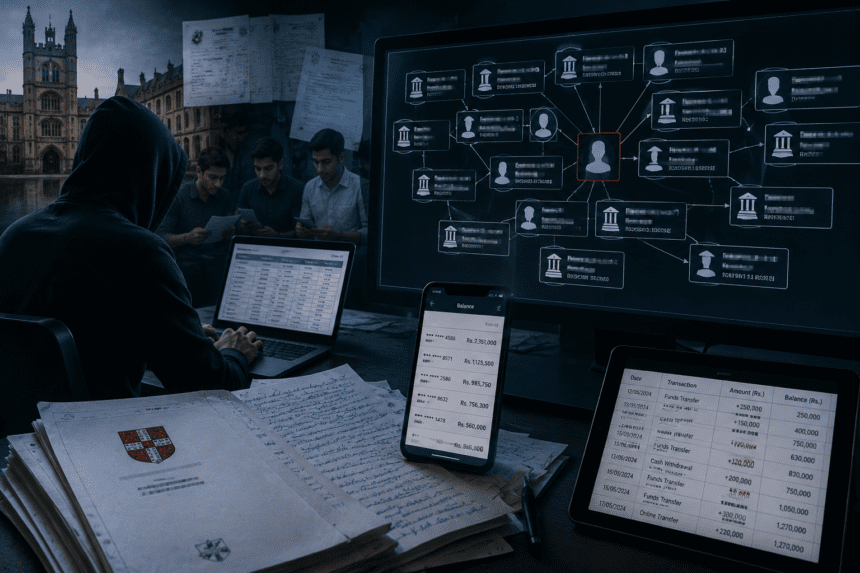
Thousands of students are reeling as the private banking details of individuals allegedly selling leaked Cambridge International examination papers have surfaced across social media platforms. The data dump, which appeared on Telegram and WhatsApp groups late Tuesday, includes bank account numbers, associated mobile wallet IDs, and names of individuals accused of orchestrating the breach.
The leak marks a volatile turn in the ongoing controversy surrounding the May/June 2024 examination series. For weeks, students have traded rumors about compromised question papers; now, the financial infrastructure allegedly supporting the illicit trade is under public scrutiny.
The documents which appear to be screenshots of transaction histories and bank account profiles link several accounts to payments made for “early access” to mathematics and physics papers. Many of these accounts are registered with local mobile financial services, a common method for digital payments in the region.
“I paid five thousand rupees for a paper that turned out to be a fake from last year,” said one student who spoke on condition of anonymity. “Seeing these bank details leaked feels like a weird sort of justice, but it doesn’t change the fact that our grades are now tied to a compromised system.” Cambridge International has maintained a “zero-tolerance” policy regarding malpractice. In official correspondence, the board stated they are working with local authorities to track the source of the leaks.
However, the emergence of these bank details suggests the investigation has moved beyond simple digital security into the realm of financial crime. The exposure of these accounts creates a massive headache for local regulators. While the leak may help authorities trace the money trail, it also risks “doxxing” individuals who may be low-level intermediaries rather than the primary architects of the leak. For the thousands of students currently sitting for exams, the damage is already done.
The psychological toll of wondering if their hard work will be undermined by a leaked paper is arguably more damaging than the technical breach itself. As of Wednesday morning, at least three of the exposed mobile wallet accounts have been reported as “inactive” or “suspended.” Whether this is the result of bank intervention or the account holders attempting to vanish remains unclear.
The authorities have yet to issue a formal statement confirming if these specific bank details will be used as evidence in pending criminal investigations. Until then, the online hunt for the sellers continues, fueled by a student body that feels the system has failed them.