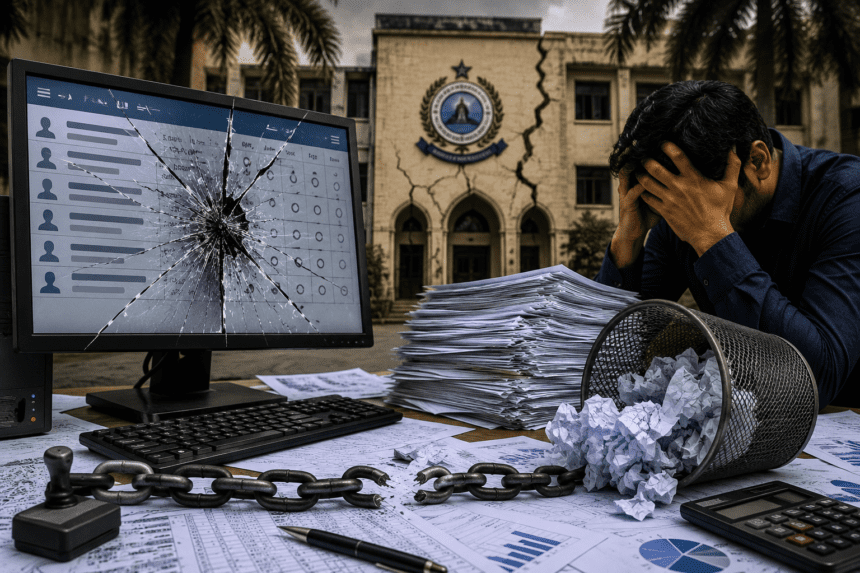
The Board of Intermediate Education Karachi (BIEK) has officially scrapped its e-marking system for intermediate examinations, citing mounting financial losses and procedural irregularities.
The decision marks a significant reversal for the board, which had championed digital assessment as a method to improve transparency and speed. Internal audits revealed the system cost the board millions more than traditional manual grading. Officials pointed to high software licensing fees and the logistical burden of training examiners, costs that were never offset by the promised gains in efficiency.
The system faced scrutiny after reports surfaced of significant discrepancies in result processing. Faculty members frequently complained about software crashes and data synchronization errors, which led to delays in result announcements.
These technical failures forced the board to revert to manual verification for thousands of answer scripts, effectively doubling the workload for examiners. “The digital transition was rushed,” said one senior board official, who spoke on condition of anonymity. “We were paying for a platform that required more oversight than the paper-based system it was meant to replace. It wasn’t modernization; it was an expensive logistical nightmare.
” The financial fallout is substantial. Documents suggest the board spent heavily on third-party IT contractors who failed to deliver a stable platform. With the project now abandoned, the board is left to reconcile these losses while facing pressure from the provincial government to explain the budgetary mismanagement.
Teachers’ unions, who had long opposed the e-marking rollout, are calling for a full forensic audit of the contracts signed between the board and the IT vendors. They argue that the failure wasn’t just technical, but a symptom of poor procurement processes. For students, the move back to manual grading brings a return to familiar, albeit slower, timelines.
The board now faces the challenge of rebuilding trust in its examination processes, a task made harder by the shadow of the failed digital experiment. The BIEK plans to return to the conventional manual marking system starting with the upcoming assessment cycle. Whether this shift will stabilize the board’s finances remains the primary question for the provincial education department.