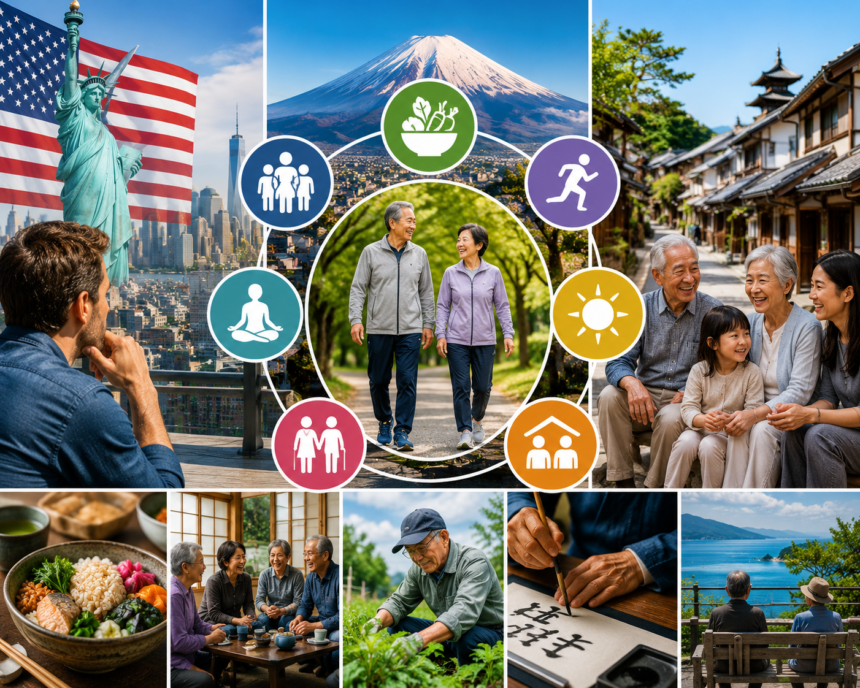
The United States faces a stark demographic reality life expectancy has stalled, even dipped, while Japan continues to set global records for human longevity. It isn’t just about genetics or a miracle pill. It’s the result of systemic choices that prioritize collective health over the individualistic, high-stress grind that defines the American experience. The Japanese approach centers on preventive care.
In Tokyo, annual health checkups aren’t just encouraged; they are embedded into the culture and the workplace. Citizens receive regular screenings that catch hypertension and glucose imbalances years before they manifest as chronic disease. In contrast, the U.S. remains a reactive system, often waiting for a catastrophic health event a heart attack or a stage-three diagnosis before heavy intervention begins. Dietary habits further widen the gap. Japan’s national nutritional guidelines focus on variety and portion control, heavily subsidized by school lunch programs that emphasize fresh vegetables, fish, and fermented foods.
The American diet is saturated with ultra-processed convenience foods, driven by a food supply chain that prioritizes shelf-life and profit margins over caloric quality. Then, there is the social infrastructure. Japan’s “community design” keeps the elderly mobile and connected. Sidewalks are abundant, public transit is reliable, and the social fabric discourages the profound isolation that plagues millions of aging Americans. Loneliness is a public health crisis in the U.S., linked to a 26% increase in mortality risk.
In Japan, the structure of neighborhoods naturally prevents that level of detachment. “We treat health as a private commodity,” says Dr. Elena Rossi, a public health researcher who has studied the disparity. “Japan treats it as a national asset.
” The Japanese government also maintains a rigid price cap on medical services. No matter the provider, the cost for a specific procedure is identical across the country. This eliminates the predatory billing and insurance complexity that keeps many Americans from seeking care until it’s too late. The U.S. spends more on healthcare per capita than any other nation, yet it lags behind in nearly every measurable outcome.
If the American medical establishment continues to focus on high-tech cures while ignoring the basic, low-cost foundations of public health, the life expectancy gap won’t just persist it will widen. The lesson from across the Pacific is clear: longevity isn’t bought in a hospital room. It is built into the way a society feeds, moves, and connects with its people every single day.