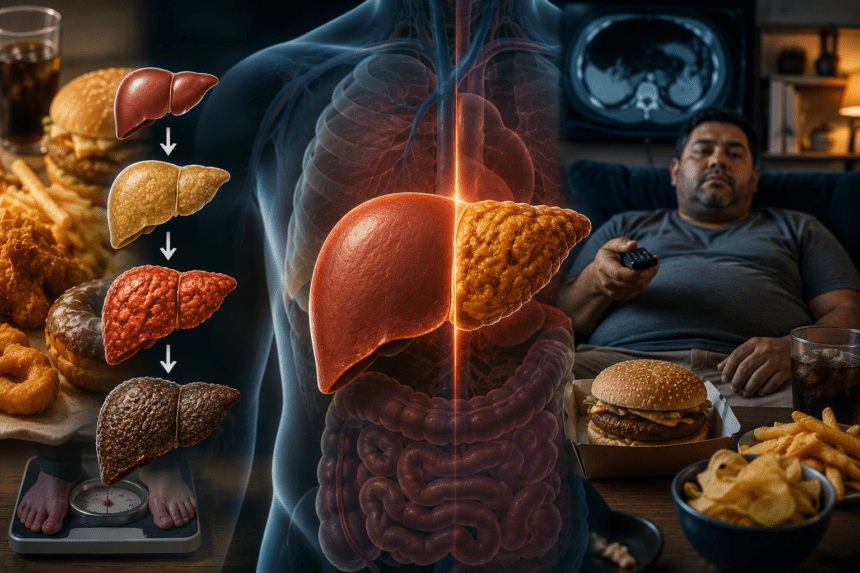
The global health landscape is shifting as fatty liver disease moves from a niche concern to a mainstream crisis. New clinical assessments suggest that roughly 50% of adults now live with some form of metabolic dysfunction-associated steatotic liver disease (MASLD), a condition once tethered strictly to heavy alcohol consumption but now fueled by modern dietary habits.
The liver acts as the body’s primary filter. When it accumulates excess fat, its ability to process toxins and regulate metabolism falters.
For millions, this isn’t a sudden diagnosis; it’s a slow-burn progression that often remains symptomless until significant scarring, or cirrhosis, takes hold. “We are seeing a transformation in what we consider ‘normal’ liver health,” said Dr. Elena Rossi, a hepatologist tracking metabolic trends. “Patients come in with routine blood work, and we find elevated enzymes that point to a system under stress.
They aren’t drinking alcohol, yet their livers look like they are.” The surge is tied directly to the ubiquity of ultra-processed foods, sedentary lifestyles, and the rise of insulin resistance. In the past, doctors looked for specific markers linked to obesity. Today, the data shows that even individuals with a “healthy” body mass index are presenting with fatty livers, a phenomenon researchers call “lean MASLD.
” The consequences are not merely localized to the organ. A fatty liver triggers systemic inflammation, increasing the risk of type 2 diabetes and cardiovascular disease. When the liver struggles, the entire metabolic engine misfires. Public health officials are now calling for a shift in diagnostic protocols. Currently, most patients aren’t screened until they present with overt symptoms. By then, the damage is often difficult to reverse.
Experts argue that liver health should be treated with the same urgency as blood pressure or cholesterol monitoring. “We can’t just wait for the liver to fail,” said Dr. Marcus Thorne, a clinical researcher. “This is a manageable condition if caught during the early stages of fat accumulation.
The challenge is that the body doesn’t complain until the situation is desperate.” For many, the path forward remains tied to fundamental lifestyle shifts specifically, reducing refined sugars and increasing physical activity. However, as the prevalence rate climbs toward the 50% mark, the medical community is bracing for a future where liver disease management becomes a standard component of primary care, rather than a specialist-only concern.