As temperatures soar during the summer months, protecting your health becomes more important than ever. Prolonged exposure to extreme heat can lead to dehydration, heat exhaustion, and other serious health complications. Experts recommend taking simple precautions to stay safe and comfortable during hot weather.
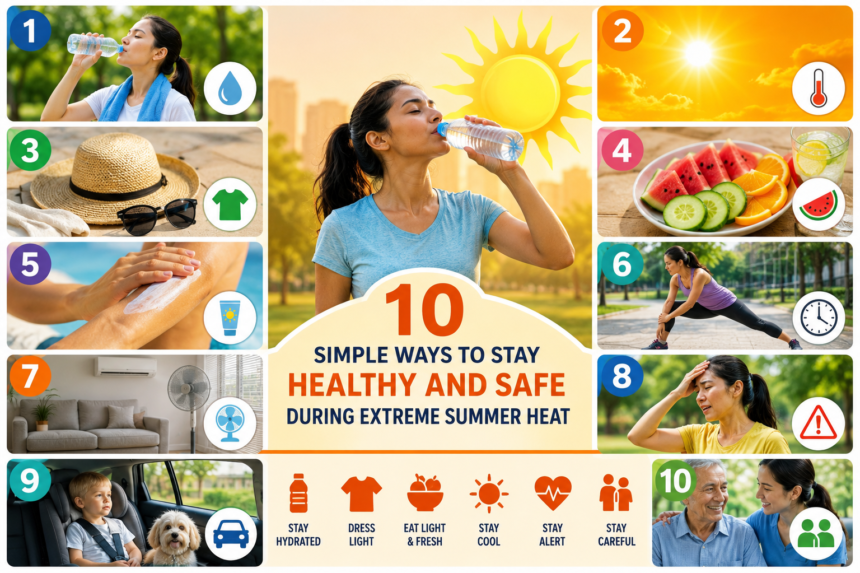
1. Drink Plenty of Water
Staying hydrated is the most effective way to prevent heat-related illnesses. Drink water regularly throughout the day, even if you do not feel thirsty.
2. Avoid Direct Sunlight During Peak Hours
Try to stay indoors between 11 a.m. and 4 p.m., when temperatures and UV radiation are typically at their highest.
3. Wear Light and Breathable Clothing
Choose loose-fitting, light-colored clothes made from natural fabrics such as cotton to help your body stay cool.
4. Eat Water-Rich Foods
Fruits and vegetables like watermelon, cucumber, oranges, and lettuce can help replenish fluids and essential nutrients.
5. Use Sunscreen
Apply sunscreen with an appropriate SPF before going outdoors to protect your skin from harmful ultraviolet rays.
6. Limit Strenuous Physical Activity
Avoid intense exercise during the hottest parts of the day. If necessary, schedule workouts for early morning or evening hours.
7. Keep Your Home Cool
Use fans, air conditioning, curtains, or blinds to reduce indoor temperatures and create a more comfortable environment.
8. Watch for Signs of Heat Illness
Symptoms such as dizziness, excessive sweating, nausea, headaches, and weakness may indicate heat exhaustion and require immediate attention.
9. Never Leave Children or Pets in Vehicles
Temperatures inside parked cars can rise rapidly, creating life-threatening conditions within minutes.
10. Check on Vulnerable Individuals
Older adults, young children, and people with chronic illnesses are particularly vulnerable to extreme heat and may need additional support.
Health experts stress that taking these simple precautions can significantly reduce the risk of heat-related illnesses and help individuals stay healthy throughout the summer season. As heatwaves become more frequent and intense in many parts of the world, awareness and preparedness remain essential for protecting public health.