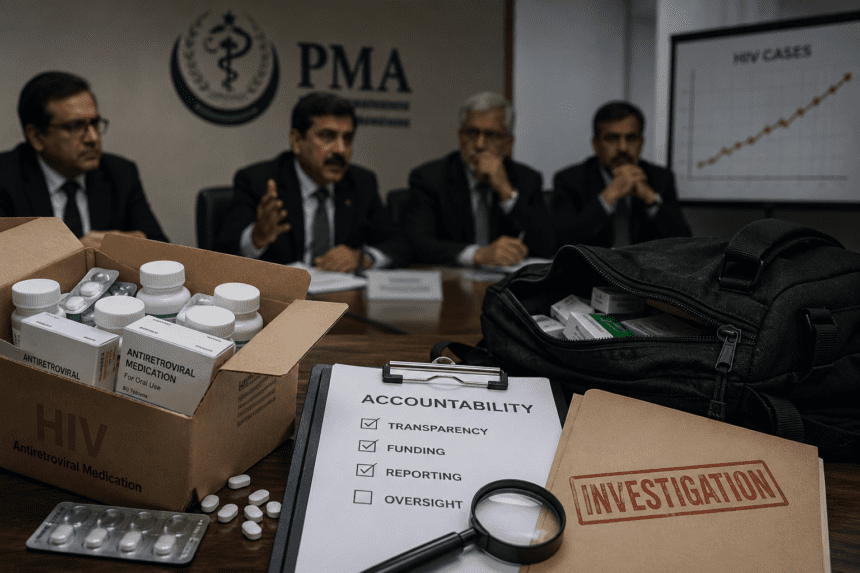
The Pakistan Medical Association (PMA) has launched a stinging critique of oversight mechanisms regarding HIV management, demanding a high-level probe into the reported theft of antiretroviral (ARV) medicines. The call comes as health experts warn that supply chain failures are fueling a dangerous rise in infections across the country.
Doctors are sounding the alarm because the medicine isn’t just going missing it’s appearing on the black market. For patients living with HIV, a single missed dose isn’t a minor setback; it’s a direct threat to their survival. When the supply chain breaks, the virus gains ground. The PMA’s leadership is now pointing fingers at the NGOs tasked with distributing these life-saving drugs.
They argue that the current model lacks transparency, leaving a vacuum where corruption thrives. Without a rigorous audit of how these organizations handle government and donor-funded supplies, the medical community says the epidemic will remain uncontained. “We are seeing a systemic failure,” said a senior PMA representative.
“When essential medicines are diverted for profit while patients suffer, it isn’t just a logistical error it is a criminal betrayal of public health.
” The crisis is compounded by the fact that HIV testing and treatment centers, often managed by third-party NGOs under government contracts, have faced minimal scrutiny for years. The PMA is now pushing for a mandatory, independent audit of all NGO-led HIV programs.
They want to know exactly where the pills are going and why the current inventory tracking—if it exists—is failing to stop the leakage. For the patients caught in the middle, the stakes couldn’t be higher. HIV treatment requires strict adherence to a daily regimen. When the medicine disappears from clinics, patients are forced to either go without or pay exorbitant prices to unlicensed sellers.
Health officials have yet to release a definitive plan to address the theft. Instead, the response has been a series of internal reviews that critics describe as “bureaucratic window dressing.” The PMA’s demand for accountability marks a shift from quiet internal complaints to public confrontation.
They’ve made it clear: until the flow of medicine is secured and the organizations responsible are held to account, the state’s efforts to curb the HIV epidemic will continue to fail.