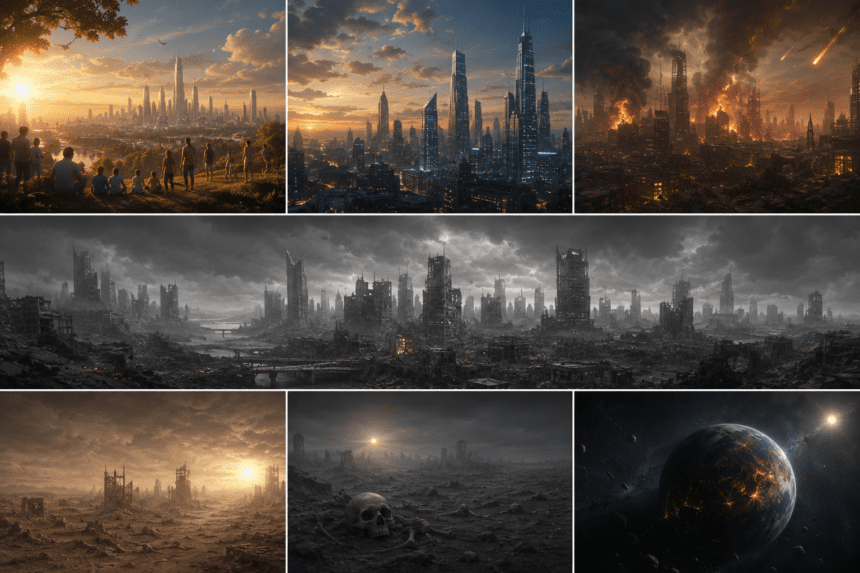
The clock is ticking, though not as loudly as doomsday theorists might claim. A recent study published in Scientific Reports suggests that while human extinction is a statistical certainty, the timeline isn’t measured in the decades that define our current climate anxiety. It’s measured in hundreds of thousands—or even millions—of years.
Researchers at the University of Bristol utilized a supercomputer model to simulate the distant future of Earth’s climate. Their findings center on the formation of a new supercontinent, Pangea Ultima, expected to coalesce in roughly 250 million years. The study isn’t just about geology; it’s about habitability.
The model shows that as tectonic plates shift, volcanic activity will spike, pumping massive amounts of carbon dioxide into the atmosphere. Combined with a sun that will be brighter and hotter than it is today, the Earth is projected to become a furnace. Temperatures in many regions could soar to between 40 and 70 degrees Celsius—far exceeding the threshold for mammalian survival.
“The outlook in the distant future appears very bleak,” said Dr. Alexander Farnsworth, the study’s lead author. “Carbon dioxide levels could be double what we see today. Humans—along with many other species—would expire due to their inability to shed this heat through sweat, effectively cooking our internal organs.”
The study highlights a critical physical limitation: the mammalian body plan. While humans have shown a remarkable capacity for technological adaptation—building climate-controlled environments and seeking shelter—biology has hard boundaries. If the wet-bulb temperature of the planet consistently stays above 40 degrees Celsius, no amount of air conditioning can save a biosphere that relies on plants and secondary food chains that will have already collapsed.
Critics of the study argue that focusing on 250 million years from now is a distraction from the immediate threats posed by current anthropogenic climate change. They point out that we don’t need a supercontinent to cause a mass extinction event; we are already observing rapid biodiversity loss that could collapse the systems humans depend on within the next century.
Dr. Farnsworth acknowledges this distinction. The research wasn’t designed to minimize current crises, but to provide a boundary for how long a planet can physically support complex life. It effectively defines the “habitable window” for Earth.
For now, the math is clear: the planet will eventually become uninhabitable for humans, but the cause will be the slow, inevitable churning of the Earth’s mantle, not the short-term choices of a single species. We have millions of years left, provided we don’t make the planet unlivable long before the continents decide to do it for us.