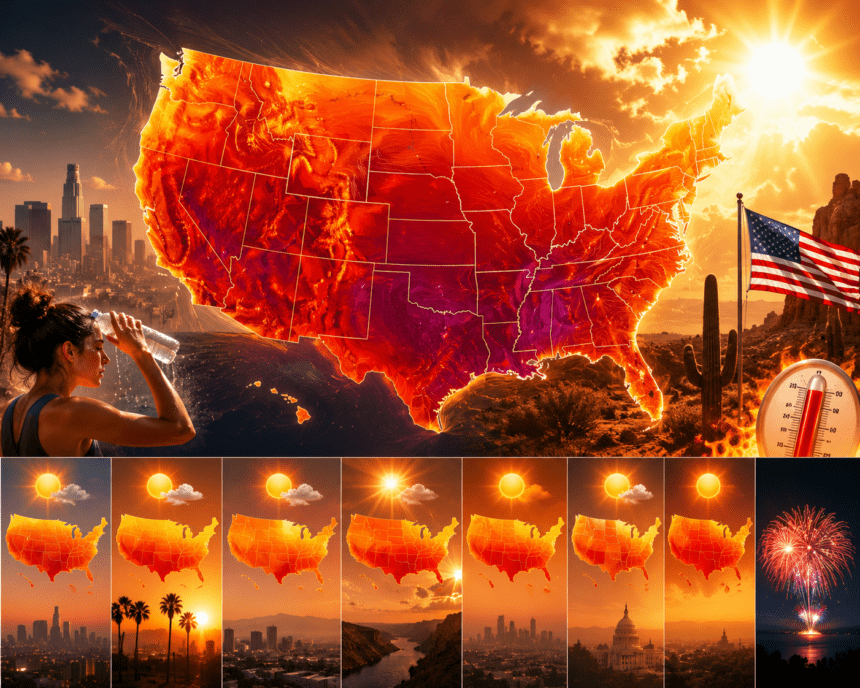
A massive heat dome has settled over the United States, pushing temperatures into triple digits for millions of Americans just as the country prepares for the July 4 holiday. From the Pacific Northwest to the Atlantic coast, the National Weather Service (NWS) has issued heat alerts covering nearly 100 million people.
Conditions are expected to peak between Wednesday and Friday, complicating travel plans and outdoor celebrations. The relentless heat isn’t just a nuisance; it’s a public health threat.
In California and the Southwest, the mercury is climbing toward 110 degrees Fahrenheit. Meteorologists warn that the lack of overnight cooling is the real danger. When temperatures don’t drop, the human body can’t recover from the daytime stress, significantly increasing the risk of heat exhaustion and stroke.
“This is a prolonged, dangerous event,” said an NWS meteorologist in a briefing Tuesday. “We are seeing temperatures 15 to 20 degrees above average for this time of year.”
The timing is particularly difficult for emergency services. With thousands of families heading to parks, beaches, and fireworks displays, the risk of heat-related emergencies is surging. State officials in affected zones are urging residents to limit outdoor activity to the early morning hours and to check on elderly neighbors who may be struggling with inadequate cooling.
The power grid is also under pressure. Utility providers in several states have warned of potential strain as air conditioning demand hits seasonal highs. While officials maintain that the grid is currently stable, they have asked residents to set thermostats to 78 degrees or higher during the peak afternoon hours to prevent localized outages.
By Saturday, a slow-moving cold front is expected to push into the central U.S., offering some relief to the Plains and Midwest. However, the East Coast will likely remain trapped in the heat bubble through the weekend, keeping the holiday festivities sweltering.
For those planning to be outside, the standard advice from health officials is simple: stay hydrated, wear light clothing, and find shade. If you feel dizzy or nauseous, get out of the sun immediately. The heat is not going anywhere for the next 72 hours, and the consequences of ignoring the warning are immediate.