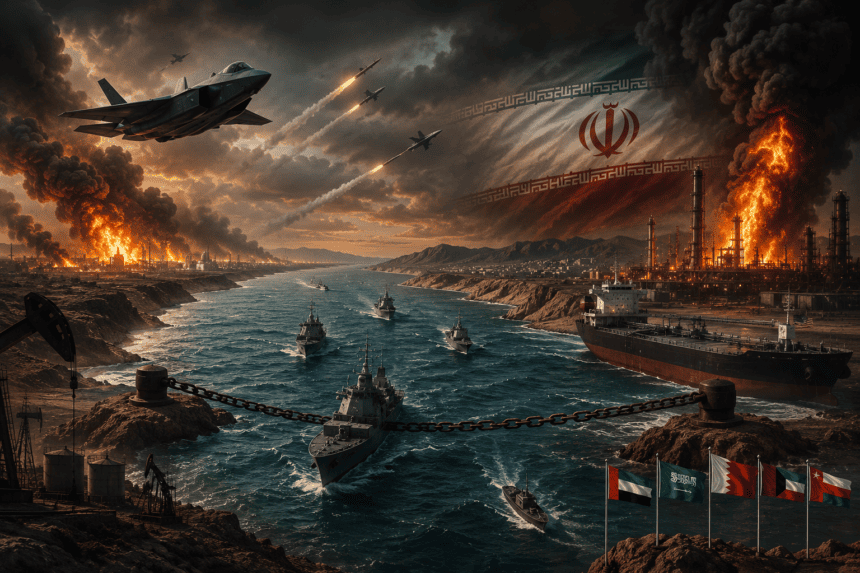
The United States launched a series of targeted airstrikes against Iranian military installations early Tuesday, marking a sharp escalation in regional hostilities. Washington says the operation aimed to degrade Iran’s drone and missile launch capabilities. Tehran responded within hours, announcing the total closure of the Strait of Hormuz to all commercial shipping.
The move effectively chokes the world’s most critical oil artery. Nearly 20% of global petroleum consumption passes through this narrow waterway. Global markets reacted instantly; Brent crude futures spiked 8% in pre-market trading, touching levels not seen since the 2022 energy crisis.
“We have acted to protect our interests and those of our allies,” a Pentagon spokesperson said in a brief, pre-dawn briefing. The official provided no details on casualty counts or the specific nature of the targets hit, declining to field questions on how the U.S. plans to reopen the shipping lane.
In Tehran, state television aired footage of naval vessels taking up defensive positions. The message from the Supreme Leader’s office was blunt: the strait remains shut until “all acts of aggression cease.” Iranian officials have long threatened this maneuver as a final lever of pressure, but this is the first time the regime has followed through on the threat in a live conflict scenario.
Gulf states, caught in the crossfire, are scrambling. Saudi Arabia and the UAE have both activated emergency defense protocols, fearing retaliatory drone swarms against their own energy infrastructure. Stocks across the Gulf Cooperation Council (GCC) plummeted at the opening bell, with investors dumping assets as the prospect of a prolonged regional blockade looms.
The U.S. Fifth Fleet, headquartered in Bahrain, has moved assets into a high-alert posture. Navy commanders have been instructed to monitor for Iranian fast-attack craft, which have historically harassed commercial vessels in the region.
Behind the scenes, diplomatic backchannels are reportedly frantic. European capitals are urging restraint, fearing that a protracted closure of the Strait will trigger a global recession. For now, however, the tankers remain anchored, and the flow of oil has stalled.
The immediate danger isn’t just the price of a barrel of oil; it’s the risk of a miscalculation. With warships from both nations now operating in the same confined waters, the margin for error has vanished.