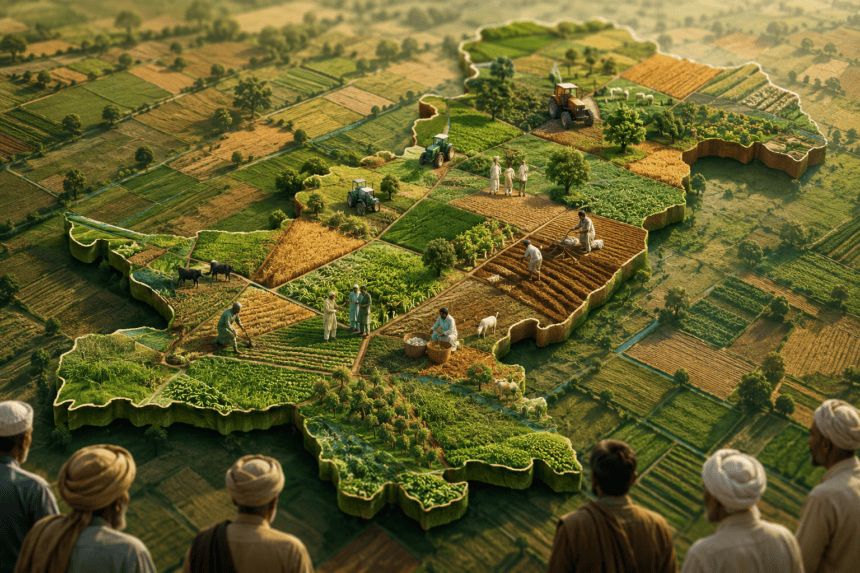
Pakistan’s first comprehensive agriculture census in over a decade paints a grim picture of the country’s rural backbone. The data, released by the Pakistan Bureau of Statistics, confirms what many farmers have long claimed: the smallholder is disappearing, and the land is increasingly concentrated in the hands of a few.
The numbers are stark. The total number of private farms has stagnated, while the average farm size continues to shrink. Over 60% of farmers now hold less than five acres of land — a plot size that barely sustains a family, let alone contributes to the national food basket. These smallholders are being squeezed out by rising input costs, from fertilizer to diesel, leaving them unable to compete with large-scale corporate entities.
“We aren’t just losing crops; we’re losing the people who grow them,” said an official from the Kisan Ittehad, speaking on condition of anonymity. “When a farmer can’t afford the seeds for the next season, the land doesn’t stay fallow. It gets absorbed by the landlord next door.”
The census highlights a shift in land utilization. While the total cropped area remains stable, the productivity per acre has plateaued. This stagnation isn’t due to a lack of technology, but a lack of access. Large-scale landowners have moved toward mechanization and high-yield commercial crops, while the majority of Pakistan’s farmers are still using methods that haven’t changed in thirty years.
Water scarcity is the silent killer in these findings. The census data shows a significant drop in tube-well efficiency across Punjab and Sindh, the country’s agricultural heartlands. With groundwater levels plummeting, the cost of irrigation has become a major barrier to entry. For a farmer with two acres, the electricity bill for a single pumping cycle can wipe out the entire profit margin of a wheat harvest.
The policy response has been predictably bureaucratic. The government cites the census as a tool for “evidence-based planning,” yet the Ministry of National Food Security has offered no immediate roadmap to address the land consolidation trend.
If these patterns hold, the countryside will continue to transition from a landscape of independent families to one of industrial estates. The federation beneath the fields is changing — and for the millions who rely on the soil for survival, the shift is anything but sustainable.