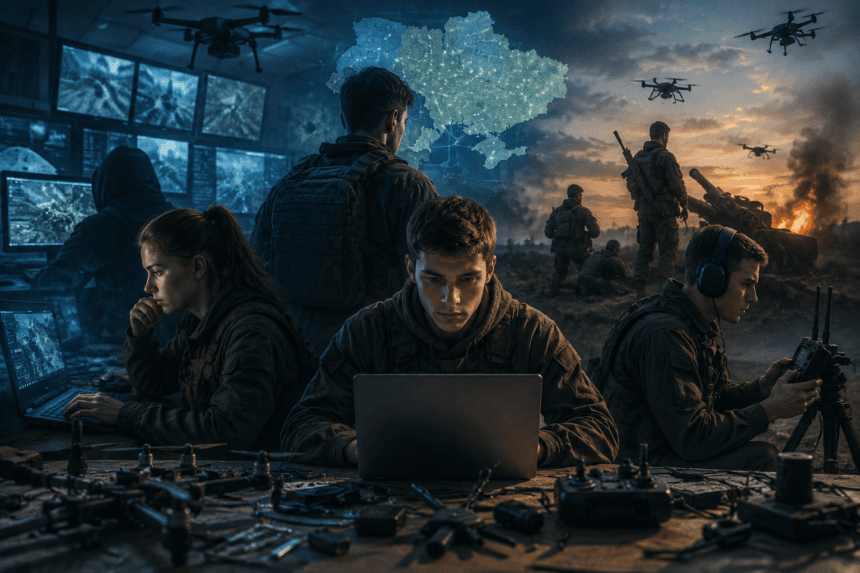
KYIV — The command centers directing Ukraine’s drone strikes aren’t filled with graying generals hunched over paper maps. They are filled with software engineers in hoodies, most of them under 30, who spent their early careers building fintech apps and e-commerce platforms.
They are the architects of the “Delta” situational awareness system and a sprawling network of DIY drone production. In a conflict where artillery shells are rationed, these young coders have effectively turned the battlefield into a real-time software deployment environment.
“We don’t have the luxury of a five-year procurement cycle,” says Dmytro, a 26-year-old lead developer at a volunteer-run drone laboratory in Kyiv. He asked that his last name be withheld for security reasons. “If a piece of code doesn’t work, a unit loses a position. We push updates to the front line via Telegram channels in minutes, not months.”
This generational shift has fundamentally altered how the war is fought. Traditional military hierarchies in Kyiv were initially skeptical of the “IT army” volunteers. That changed after the first six months of the invasion, when these agile teams proved they could identify Russian targets faster than the established intelligence apparatus.
The stakes are high. These young developers are currently grappling with the rapid evolution of electronic warfare. As Russian jamming technology improves, the “plug-and-play” drone tactics that worked in 2022 are becoming obsolete. The work now involves complex frequency-hopping algorithms and AI-assisted target acquisition that requires constant, high-speed iteration.
The military establishment has since institutionalized many of these volunteer groups, folding them into the Ministry of Digital Transformation. Yet, the culture remains distinctly Silicon Valley. They operate on Slack, prioritize speed over perfection, and treat the battlefield as a live beta test.
It’s an uncomfortable reality for conventional military planners. The reliance on civilian tech talent means the war effort is now tethered to the same workforce that once kept Ukraine’s banking apps and delivery services running. If these engineers leave for better-paying jobs in the West, or burn out from the relentless 20-hour workdays, the technological edge Ukraine holds could evaporate overnight.
For now, the focus is strictly on the next deployment. In a small office near the city center, a 23-year-old drone pilot turned software tester stares at a screen, watching a live feed from a drone 400 miles away. He isn’t thinking about military doctrine. He’s thinking about how to patch a vulnerability before the next sunrise.