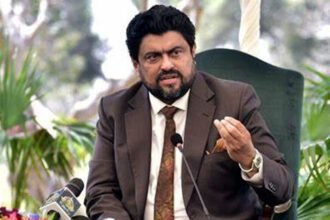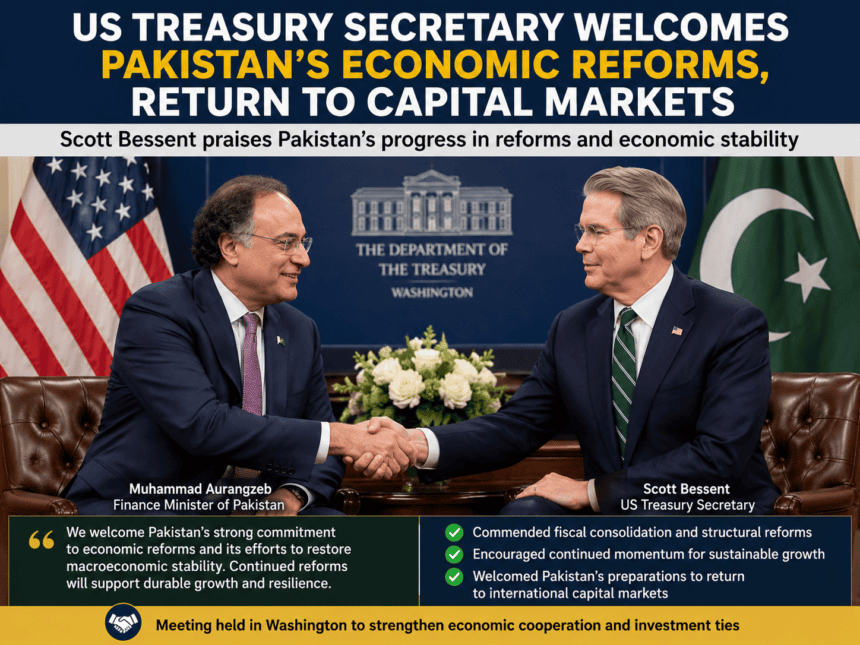
Washington, D.C., July 22, 2026: U.S. Treasury Secretary Scott Bessent has welcomed Pakistan’s progress in implementing economic reforms and praised the country’s efforts to restore macroeconomic stability and prepare for a return to international capital markets during a meeting with Pakistan’s Finance Minister Muhammad Aurangzeb in Washington.
According to a statement issued by the U.S. Department of the Treasury, Secretary Bessent acknowledged Pakistan’s achievements in restoring macroeconomic stability and advancing fiscal consolidation. He recognized the Pakistani government’s commitment to implementing significant structural reforms aimed at strengthening the economy and promoting long-term, sustainable growth.
Bessent emphasized the importance of maintaining the momentum of Pakistan’s reform agenda, saying that continued reforms are essential to achieving durable economic growth, increasing economic self-reliance, and improving the country’s resilience against future financial shocks. He also commended Pakistan’s efforts to create the conditions necessary for a successful return to international capital markets, a move seen as an important milestone for attracting foreign investment and reducing dependence on external financial assistance.
The meeting comes as Pakistan continues to implement reforms under its International Monetary Fund (IMF) program. Over the past few years, the country has taken measures to reduce its fiscal deficit, strengthen tax collection, improve public finances, and stabilize inflation and foreign exchange reserves. These reforms have been viewed positively by international financial institutions and development partners.
While the Treasury Department’s official statement focused on economic reforms, it did not mention Pakistan’s reported request for a $10 billion Exchange Stabilization Facility from the United States. However, U.S. officials later confirmed that the request was presented during the meeting. If approved, the facility could help strengthen Pakistan’s foreign exchange reserves, stabilize the Pakistani rupee, and reduce reliance on emergency external financing.
Pakistan’s economy has faced significant challenges in recent years, including high external financing needs, rising energy import costs, and regional geopolitical tensions. Despite these pressures, the government has continued pursuing economic reforms while working to improve investor confidence and restore access to international debt markets.
Analysts say the positive remarks from the U.S. Treasury Secretary represent an important vote of confidence in Pakistan’s economic direction. They believe such support from Washington could strengthen Pakistan’s standing with global investors and international financial institutions as it seeks sustainable economic growth and greater financial stability.