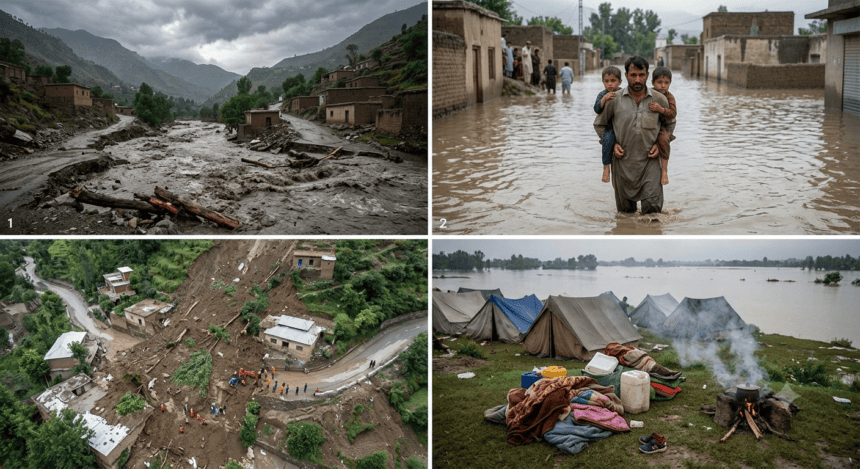
Flash floods and torrential rains have killed at least 32 people across Khyber Pakhtunkhwa since July 19, according to the Provincial Disaster Management Authority (PDMA).
The monsoon system hasn’t just brought water; it’s brought destruction to homes and infrastructure across the province. Data from the PDMA confirms that 22 children are among the dead. Another 36 people have sustained injuries as walls collapsed and floodwaters surged through low-lying residential areas.
The scale of damage is sharp. The provincial authority reports that 138 houses have been partially or completely destroyed. These aren’t just statistics to the families displaced in districts like Swat, Dir, and Kohistan, where the terrain makes rescue efforts a logistical nightmare.
“We are monitoring the situation round-the-clock,” said a PDMA spokesperson. But for those currently stranded, the government’s monitoring offers little immediate shelter.
Infrastructure has buckled under the pressure. Roads in mountainous regions remain blocked by landslides, severing access to remote villages. Local administrations are struggling to clear debris while the Met Office warns that the current spell of rain is far from over.
The human cost is rising as the monsoon deepens. With ground saturated and river levels reaching dangerous thresholds, the risk of further casualties remains high. The provincial government has directed local deputy commissioners to expedite relief distribution, but the primary challenge remains the geography itself.
For the residents of KP, the next 48 hours are critical. The monsoon is expected to intensify, and for many, the safety of their homes is no longer guaranteed.