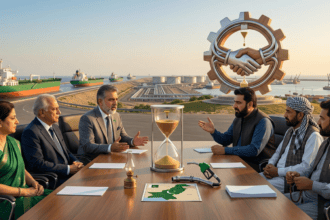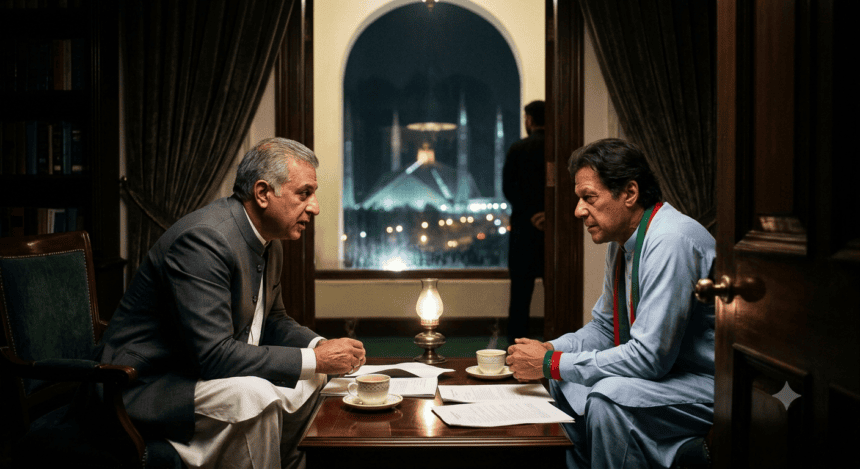
The government and the Pakistan Tehreek-e-Insaf (PTI) have quietly resumed backchannel contacts, signaling a potential thaw in the bitter standoff that has paralyzed the country’s political landscape for months.
Sources familiar with the discussions say the informal communication lines were reopened late last week. These talks aren’t formal negotiations yet. Instead, they are exploratory exchanges aimed at finding a middle ground on the contentious issues of electoral reform and the current constitutional crisis.
The move follows weeks of intense pressure on both sides. The government, currently struggling with a fragile economic recovery, needs stability to pass key legislative agendas. Meanwhile, the PTI remains locked in a battle for political relevance, with its leadership facing a mountain of legal cases and its founder, Imran Khan, still behind bars in Adiala Jail.
“It’s not a breakthrough, but it’s a start,” one senior political analyst said. “Both sides realize that the current path of total confrontation is leading to a dead end. The government can’t govern effectively with this level of street agitation, and the PTI can’t sustain its pressure indefinitely without a clear political exit strategy.”
The primary sticking point remains the legitimacy of the February 8 elections. PTI leadership continues to demand a forensic audit of specific constituencies, a condition the ruling coalition has dismissed as a non-starter. Conversely, the government is pushing for a broader political consensus on economic policy, hoping to de-escalate the rhetoric that has kept potential foreign investors on the sidelines.
Despite the backchannels, public messaging remains combative. Government ministers continue to blame the PTI for economic sabotage, while PTI leaders maintain their narrative of a stolen mandate. This duality—private dialogue versus public hostility—is a hallmark of Pakistan’s political culture, where the optics of compromise are often treated as a sign of weakness.
The success of these talks hinges on a narrow window of trust. Previous attempts at reconciliation fell apart when both sides leaked details to the press to score points with their respective bases. Whether this current effort can survive the scrutiny of political hawks in both camps is the central question.
For now, the dialogue is limited to a handful of trusted intermediaries. If they can agree on a framework for a cooling-off period, the country may see a brief respite from the protests that have defined the last year. If not, the current cycle of arrests and counter-accusations will likely intensify as the government prepares for its upcoming budget session.