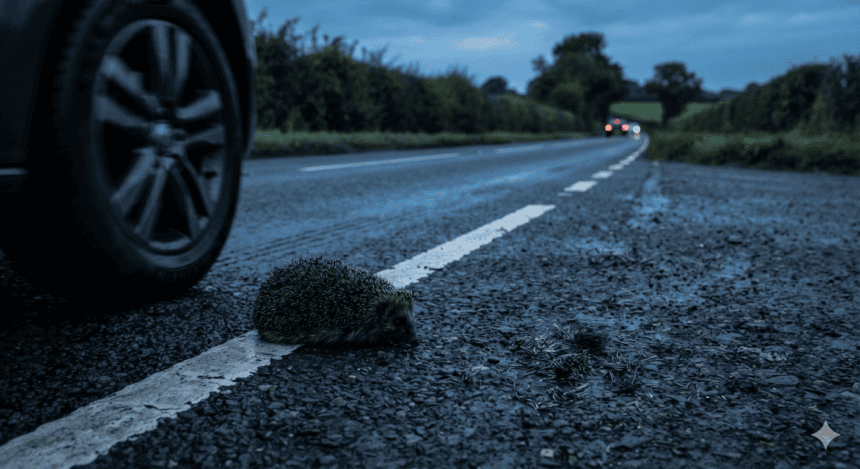
Britain’s hedgehog population is in freefall, and the country’s road network is a primary engine of the decline. Conservationists now warn that the scale of annual road deaths has become unsustainable, threatening the survival of the species in areas where they were once common.
The numbers are stark. Research from wildlife charities indicates that tens of thousands of hedgehogs are killed by vehicles every year. In some regions, local populations have dropped by as much as 50% in the last two decades. It’s a slow-motion crisis that often goes unnoticed until the sightings stop entirely.
“We aren’t just losing individuals; we’re losing the ability for these populations to recover,” said Sarah Jenkins, a lead researcher at the British Hedgehog Preservation Society. “When you remove breeding adults from a landscape at this rate, the local extinction clock starts ticking.”
The problem isn’t just traffic volume. It’s habitat fragmentation. Hedgehogs are natural wanderers, often traveling up to two kilometers a night in search of food or mates. When developers build roads or fences that slice through their foraging grounds, these animals are forced into high-risk crossings. They don’t have a biological response to headlights or tires; their instinct is to curl into a ball—a defense mechanism that offers zero protection against a two-ton vehicle.
Infrastructure planners have largely ignored the species in road design. While large-scale projects often include “wildlife bridges” for deer or badgers, small mammals are rarely prioritized. This oversight means that even minor upgrades to rural roads can turn a safe foraging route into a death trap overnight.
Some local councils are beginning to experiment with “hedgehog highways”—small gaps in fences and tunnels under roads—to reconnect fragmented habitats. But these are piecemeal solutions. Without a national strategy to incorporate wildlife corridors into existing road networks, experts argue that these measures will be little more than a band-aid on a gaping wound.
The decline of the hedgehog is more than a loss for wildlife enthusiasts. It’s a bellwether for the health of the wider ecosystem. These animals are essential for controlling garden pests, and their disappearance signals a collapse in the biodiversity of suburban and rural environments alike.
For now, the asphalt remains the deadliest predator in the hedgehog’s world. Unless planners treat the roads as barriers to life rather than just conduits for traffic, the sound of rustling in the hedgerows may soon become a memory.