A new scientific study has uncovered fresh secrets about Stegosaurus, one of the most recognizable dinosaurs of the Jurassic Period. The latest research is providing paleontologists with a deeper understanding of the dinosaur’s unique body structure, defensive adaptations, growth, and behavior nearly 150 million years ago.
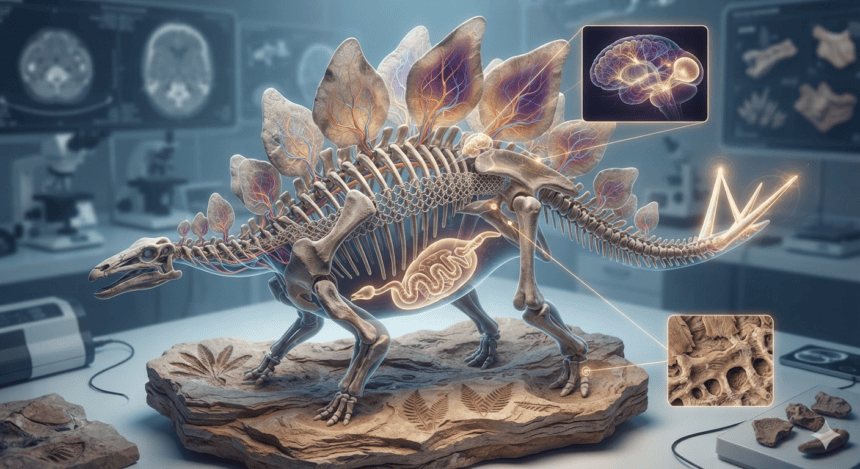
Researchers analyzed fossil skeletons, the dinosaur’s distinctive back plates, and its spiked tail using CT scanning, 3D digital reconstruction, and biomechanical modeling. The findings suggest that Stegosaurus’ iconic features served multiple purposes beyond what scientists previously believed.
Stegosaurus was a large herbivorous dinosaur that measured approximately 7 to 9 meters (23–30 feet) in length and weighed between 3 and 5 tonnes. It had a relatively small head, a powerful body supported by four sturdy legs, and a characteristic double row of large, kite-shaped plates running along its back.
One of the biggest mysteries surrounding Stegosaurus has always been the function of these plates. According to the latest research, the plates may have helped regulate body temperature by allowing blood to circulate through them. Scientists also believe they could have been used for display, species recognition, or attracting mates by making the animal appear larger and more impressive.
The study also provides new evidence about Stegosaurus’ famous tail spikes, known as the “thagomizer.” Biomechanical analysis suggests that the dinosaur could swing its muscular tail with considerable force, making the sharp spikes an effective defense against predators such as Allosaurus and other large carnivorous dinosaurs.
Researchers found that Stegosaurus possessed a small brain compared to its body size, but this did not necessarily mean it was unintelligent. Scientists believe its nervous system and instincts were well adapted for survival, enabling it to feed efficiently, detect danger, and defend itself when threatened.
Experts emphasize that every new fossil discovery helps improve our understanding of dinosaur evolution and prehistoric ecosystems. Future research and additional fossil discoveries are expected to reveal even more about how Stegosaurus lived, interacted with its environment, and survived during the Jurassic Period.