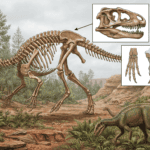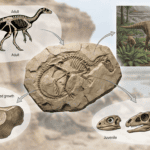
A new fossil study has revealed fresh insights into Massospondylus, one of the best-known early long-necked dinosaurs from the Early Jurassic Period. The latest research is helping paleontologists better understand its anatomy, growth, behavior, and evolutionary significance, providing a clearer picture of dinosaur life nearly 200 million years ago.
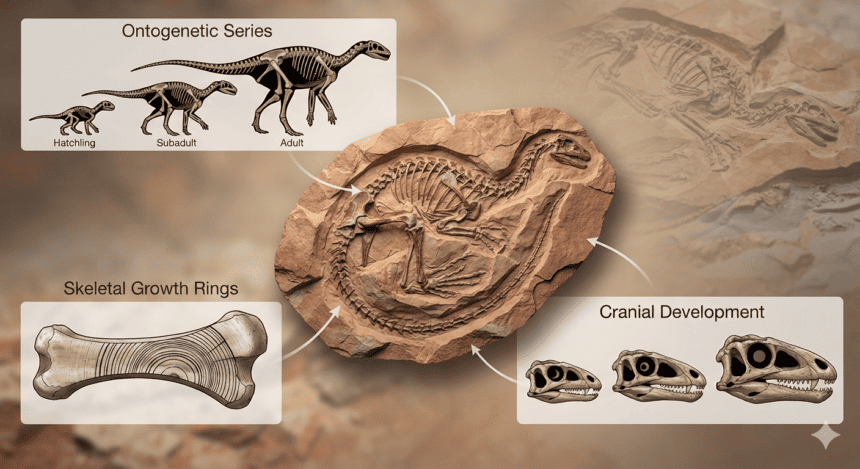
Researchers examined exceptionally well-preserved fossil skeletons, eggs, and embryonic remains using CT scanning, 3D digital reconstruction, and microscopic bone analysis. The findings reveal new details about how Massospondylus grew, moved, and developed from hatchling to adulthood.
Massospondylus measured approximately 4 to 6 meters (13–20 feet) in length and belonged to a group of early dinosaurs known as sauropodomorphs, the ancestors of the gigantic long-necked sauropods. Although primarily herbivorous, some scientists suggest it may have occasionally eaten small animals or insects.
The study indicates that Massospondylus had a long neck, strong hind limbs, and grasping forelimbs, allowing it to feed on a wide variety of plants. Scientists believe it may have been capable of walking on two legs while moving quickly and using all four limbs when feeding or moving slowly.
Researchers also studied fossilized nests and embryos, providing rare evidence of dinosaur reproduction and parental behavior. The discoveries suggest that young Massospondylus remained at nesting sites for some time after hatching, indicating that adults may have provided a degree of parental care.
Scientists say these findings improve our understanding of dinosaur growth, reproduction, and the evolutionary transition from smaller early dinosaurs to the enormous long-necked sauropods that later dominated prehistoric ecosystems.
Experts believe future fossil discoveries and advanced imaging technologies will continue revealing new details about the biology, behavior, and evolution of Massospondylus and other early dinosaurs.