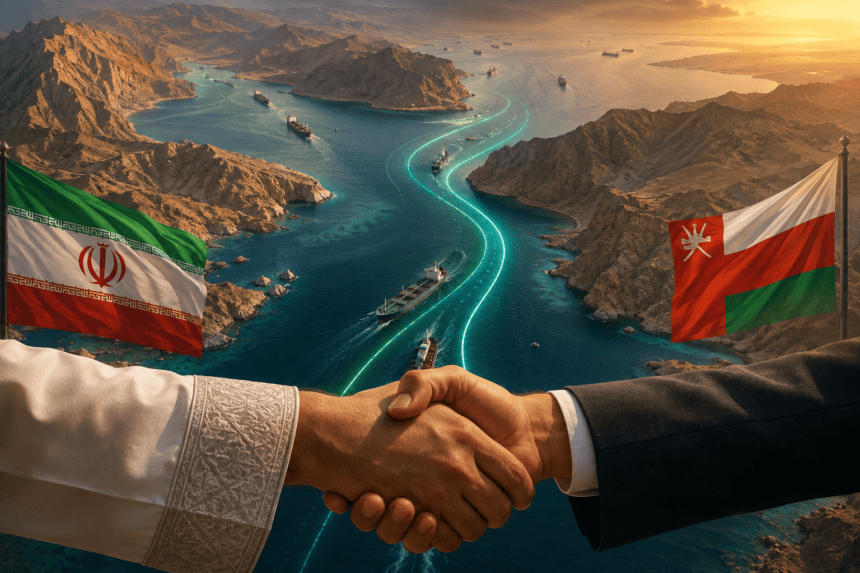
Iran and Oman have reached a formal agreement defining the coordinates for a maritime transit route through the Strait of Hormuz. The deal, finalized during high-level diplomatic exchanges in Tehran, seeks to clarify navigation boundaries in one of the world’s most critical oil supply chokepoints.
For years, the overlapping claims and lack of precise demarcation in the narrow waterway created potential for friction between Iranian naval forces and international shipping interests. The new arrangement effectively maps out a clearer path for vessels entering and exiting the Persian Gulf.
The agreement carries significant weight for global energy security. Roughly 20% of the world’s total oil consumption passes through this narrow passage daily. By establishing fixed, agreed-upon coordinates, both nations aim to reduce the likelihood of accidental naval confrontations that have previously roiled global energy markets.
Iranian officials framed the pact as a move toward regional stability. “This agreement provides a predictable framework for maritime traffic,” said a spokesperson for the Iranian Foreign Ministry. While the technical details remain largely internal to the two navies, the political signal is clear: Tehran is signaling a preference for bilateral cooperation over naval brinkmanship in the strait.
Omani diplomats have long acted as the primary mediators between Iran and the West. By securing this border deal, Muscat reinforces its role as a neutral arbiter capable of navigating the complex geopolitical landscape of the Gulf.
The deal follows a period of heightened military activity in the region, where Iran has frequently seized tankers in response to international sanctions or maritime disputes. Analysts suggest that by formalizing these routes, Iran is attempting to legitimize its control over the waterway while simultaneously lowering the temperature with neighboring Gulf states.
Whether the agreement will actually curb the frequency of ship seizures remains the central question for international insurers and shipping conglomerates. For now, the move provides a rare, documented instance of diplomatic progress in a region defined by its volatility.