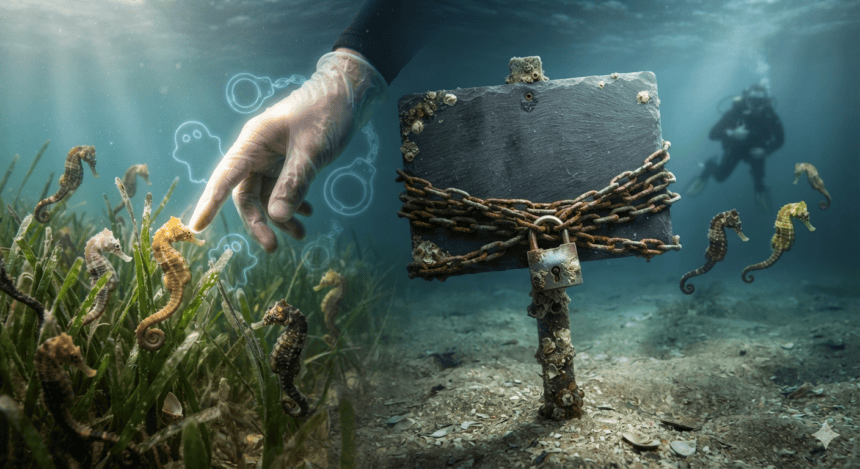
Marine authorities in the Great Barrier Reef region have issued a stern legal warning to divers, snorkelers, and boat operators following a documented surge in disturbances to delicate seahorse populations. The Queensland Department of Environment and Science (DES) confirmed Tuesday that increased incidents of harassment, habitat damage, and improper interaction have prompted the stricter enforcement measures, with significant fines and potential prosecution now on the table.
This crackdown comes as conservationists report a worrying decline in seahorse sightings across several protected zones, attributing the drop directly to human interference. Seahorses, known for their fragile nature and territorial habits, are highly susceptible to stress from close proximity, flash photography, and physical contact, which can disrupt their feeding, breeding, and camouflage behaviors.
“We’ve seen a concerning trend,” said Dr. Anya Sharma, a marine biologist with the Australian Marine Conservation Society. “These aren’t just isolated incidents; it’s a pattern of disregard that puts an immense strain on already vulnerable species. Seahorses are not toys for tourists; they are vital components of our delicate reef ecosystem.” Sharma pointed to anecdotal evidence from local dive masters who reported more aggressive approaches by inexperienced visitors and a visible increase in damaged seagrass beds — critical seahorse habitats.
The DES warning emphasizes that disturbing protected marine life, including seahorses, is a breach of the Marine Parks Act 2004. Penalties can range from on-the-spot fines exceeding AUD 2,000 for minor infractions to court-imposed penalties of up to AUD 200,000 for serious and repeated offenses. Authorities plan to increase patrols in known seahorse hotspots, particularly around Port Douglas and the Whitsunday Islands, leveraging both uniformed officers and underwater surveillance.
Local tourism operators, while acknowledging the need for conservation, express concern over the potential impact on visitor numbers. “Our livelihood depends on the reef’s health, so we fully support protecting it,” said Mark Jenkins, owner of Reef Adventures tours. “But we also need clear guidelines and more education for visitors, not just punitive measures. Most people don’t mean harm; they just don’t know any better.” Jenkins suggested mandatory pre-dive briefings focused specifically on seahorse etiquette.
Seahorses are listed under Appendix II of CITES (Convention on International Trade in Endangered Species of Wild Fauna and Flora), offering them international protection. Their unique reproductive cycles, where males carry the eggs, make their populations particularly sensitive to environmental changes and human disruption. The new warning serves as a critical reminder that the health of the reef’s smallest inhabitants is inextricably linked to the actions of its human visitors, underscoring the urgent need for responsible tourism practices.