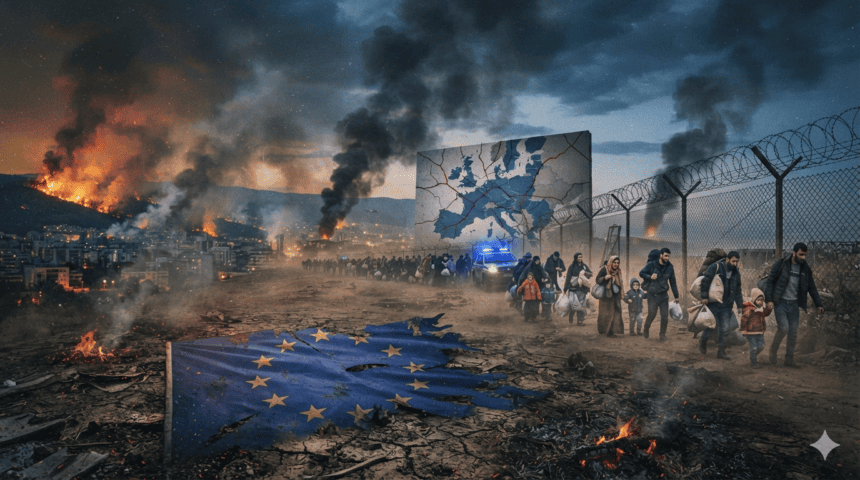
Europe is facing an unprecedented convergence of crises that is testing the structural integrity of the European Union. From the burning forests of the Mediterranean to the geopolitical fallout of the war in Ukraine and a steady, surging rise in unauthorized border crossings, the continent is struggling to maintain a cohesive response.
The numbers are stark. Frontex, the EU’s border agency, reported a surge in irregular border crossings that hasn’t been seen since 2016. Simultaneously, unprecedented heatwaves and wildfires across Greece, Italy, and Spain have forced mass evacuations, revealing a lack of unified firefighting infrastructure across member states.
Brussels is caught in a political vice. Eastern European nations remain fixated on the security threats posed by Russia, while southern states are begging for a coordinated migration policy that doesn’t leave them to shoulder the burden alone. The friction is palpable. When the EU attempted to pass a new migration pact earlier this year, the deep divides between states like Hungary and Poland versus Germany and Italy nearly derailed the entire process.
The human cost is mounting. In the Mediterranean, search-and-rescue operations are increasingly overwhelmed. Meanwhile, the climate-driven displacement is no longer a distant future; it’s a current reality. Farmers in southern Europe are seeing their livelihoods incinerated by record-breaking wildfires, leading to internal migration pressures that European governments are ill-equipped to manage.
“We are dealing with a cumulative effect,” says Julian Meyer, a policy analyst based in Brussels. “The system was designed for stability. It is now being forced to operate under a constant state of emergency.”
Policy experts argue that the current “patchwork” approach is failing. While the European Commission has pushed for faster processing of asylum claims and better technology at external borders, the political will to enforce a truly collective burden-sharing mechanism remains elusive. National governments, fearing the rise of domestic populist movements, are increasingly choosing to close internal borders—a move that fundamentally undermines the Schengen Area’s promise of free movement.
As summer continues to bring extreme weather and the conflict in Ukraine shows no signs of a diplomatic resolution, Europe’s resilience is being pushed to the limit. The question is no longer whether the EU can handle one of these crises, but whether its institutions can survive all three simultaneously.
For now, the strategy remains reactive: contain the fires, manage the arrivals, and hope the political cracks don’t turn into a permanent fracture.