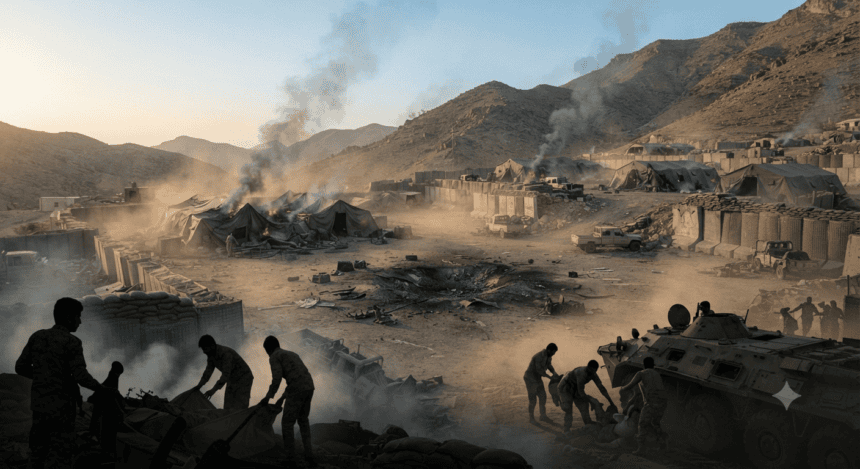
Houthi rebels launched a drone and missile assault on a military training camp in Yemen’s Lahj province early Tuesday, killing at least six soldiers and wounding several others. The attack struck during a morning parade, catching troops off guard in an area previously considered relatively stable.
The strike marks a sharp escalation in the long-standing conflict, shattering a period of relative calm in southern Yemen. Military sources on the ground confirmed the death toll could rise as rescue teams sift through the debris of the barracks.
“They hit the parade ground just as the units were assembling,” said a local commander who requested anonymity due to security concerns. “There was no warning, just the sound of the drones and then the impact.”
While the Houthi leadership in Sanaa has yet to release an official statement detailing the attack, their media channels confirmed the operation, labeling it a “precision strike” against “mercenary forces.”
The incident hits at a fragile time for the internationally recognized Yemeni government. Based in Aden, the government has struggled to maintain control over southern territories while simultaneously managing internal friction among coalition-backed factions. This latest breach of security raises immediate questions about the effectiveness of current defense systems in the region.
Local residents in the vicinity of the camp reported multiple explosions, sending plumes of smoke over the district. Hospitals in the nearby city of Al-Anad have issued urgent calls for blood donations, signaling the severity of the injuries sustained by the survivors.
This attack serves as a grim reminder that despite ongoing back-channel negotiations and regional diplomatic pressure, the war in Yemen remains far from over. The strike not only claims lives but directly threatens the delicate balance of power in the south, forcing government forces to scramble for a response that doesn’t further destabilize the area.
Military analysts suggest this could be a strategic move by the Houthis to disrupt training operations in government-held territories, signaling that no region is safe from their expanding drone capabilities.
For now, the wounded remain in critical condition, and the military command is scrambling to assess how such a high-profile target was compromised without a single alarm being raised.