By using this site, you agree to the Privacy Policy and Terms of Use.
Accept
Media HydeMedia Hyde
  • Home
  • Politics
  • Education
  • Entertainment
  • Sports
  • Blogs
  • Business & Commerce
  • Others
    • Religious
    • Metropolitan
    • Climate and Weather
Font ResizerAa
Media HydeMedia Hyde
Font ResizerAa
  • Home
  • Politics
  • Education
  • Entertainment
  • Sports
  • Blogs
  • Business & Commerce
  • Others
    • Religious
    • Metropolitan
    • Climate and Weather
Follow US
© 2026 Media Hyde Network. All Rights Reserved.
Climate and WeatherHeadline

The Climate Tax: Why Extreme Weather is Breaking Global Markets

Last updated: August 11, 2026 9:04 pm
Ayesha Masood
Share
The Climate Tax: Why Extreme Weather is Breaking Global Markets
SHARE

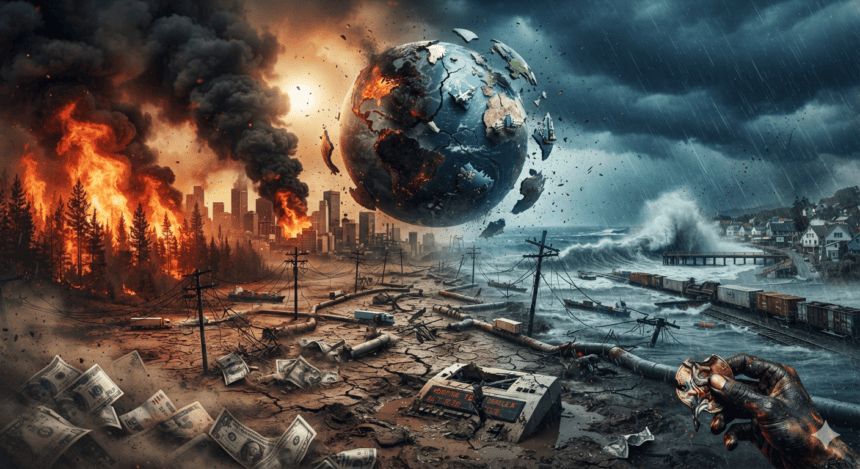
Extreme weather is no longer a seasonal inconvenience; it is a structural threat to the global economy. From the scorched agricultural belts of the American Midwest to the flooded manufacturing hubs of Southeast Asia, the cost of climate volatility has moved from the fringes of corporate balance sheets to the center of fiscal policy.

Insurance premiums are soaring. Supply chains—once optimized for efficiency—are now buckling under the weight of recurring disasters. When a hurricane slams into a critical shipping lane or a heatwave halts production in a semiconductor plant, the ripple effect reaches grocery stores and electronics retailers within weeks.

“We are seeing a permanent shift in risk assessment,” said Sarah Jenkins, a senior economist tracking climate-related losses. “Companies can no longer treat these events as ‘acts of God.’ They are recurring operational costs that businesses are increasingly unable to absorb.”

The numbers bear this out. Last year alone, global economic losses from natural disasters topped $250 billion. More than half of that was uninsured. When a fire destroys a regional power grid or a flood wipes out a highway, the burden falls squarely on taxpayers, forcing governments to divert funds from education and infrastructure into emergency repair and disaster relief.

Agriculture remains the most vulnerable sector. Unpredictable rain patterns and record-breaking heat are shortening growing seasons and slashing yields for staples like wheat, corn, and coffee. This volatility is a primary driver of food inflation, a tax that hits low-income households hardest.

Businesses are responding with a frantic scramble for “climate resilience.” Some are relocating entire distribution centers away from flood zones, while others are investing billions in private water and power systems. These aren’t just green initiatives; they are survival strategies.

Yet, the market remains largely reactive. Investors are still struggling to price in the long-term risk of climate change, leading to a dangerous disconnect between current asset valuations and the physical reality of a warming planet.

As extreme weather becomes the new baseline, the global economy faces a stark choice: pay the rising price of disaster recovery or invest in the systemic overhaul required to withstand the storm. Right now, the world is choosing to pay for the damage.


Share This Article
Email Copy Link Print
Previous Article Pakistan and US Agree to Extend Fulbright Scholarship Program for Five More Years Pakistan and US Agree to Extend Fulbright Scholarship Program for Five More Years
Next Article Mindfulness for Beginners: 5-minute daily breathing exercises for stress relief Mindfulness for Beginners: 5-Minute Daily Breathing Exercises May Help Manage Stress
Leave a Comment

Leave a Reply Cancel reply

Your email address will not be published. Required fields are marked *

Sponsored Ads

Stay Connected

FacebookLike
XFollow
InstagramFollow
YoutubeSubscribe
WhatsAppFollow
ThreadsFollow
President Zardari confers Nishan-e-Imtiaz on NSC Commander Gen Raza
Headline information
August 12, 2026
Middle East Tensions Keep Oil Markets on Edge
Breaking
August 12, 2026
Trump Administration Cuts Annual Arctic Report Card
Climate and Weather Headline
August 12, 2026
YouTube’s 2027 Revenue Overhaul: What Creators Actually Need to Know
Headline Technology
August 12, 2026
PTI demands judicial inquiry into Rawalpindi firing incident
Headline Law and Order
August 12, 2026
Jibran Nasir alleges 12-hour torture preceded Mir Raza Ali’s murder
Court & Crime Headline
August 12, 2026

You Might Also Like

Trump Budget Plan Sparks Alarm Over Future of U.S. Ocean Monitoring Network
Climate and WeatherHeadline

Trump Budget Plan Sparks Alarm Over Future of U.S. Ocean Monitoring Network

By
Ayesha Masood
OpenAI pulls the plug on Atlas AI browser after nine-month run
HeadlineTechnology

OpenAI pulls the plug on Atlas AI browser after nine-month run

By
Haris Ali
Climate and Weather

Amber Snow Warning as Freezing Weather Sweeps Across the UK

By
Wajeeha Batool
Climate and Weather

Drizzle Drops, Power Flops and K- Electric fails once again

By
Sana Mustafa
Media Hyde Media Hyde Dark
Facebook Twitter Youtube Rss Medium

About US

Media Hyde Network: Your instant connection to breaking stories and live updates. Stay informed with our real-time coverage across politics, tech, entertainment, and more. Your reliable source for 24/7 News.

Top Categories
  • Headline
  • Politics
  • Entertainment
  • Education
  • Sports
  • Religious
  • Metropolitan
  • Climate and Weather
Usefull Links
  • Contact Us
  • Disclaimer
  • Privacy Policy
  • Cookies Policy
  • Advertising Policy
  • Terms & Conditions

© 2025 Media Hyde Network. All Rights Reserved.

Welcome Back!

Sign in to your account

Username or Email Address
Password

Lost your password?