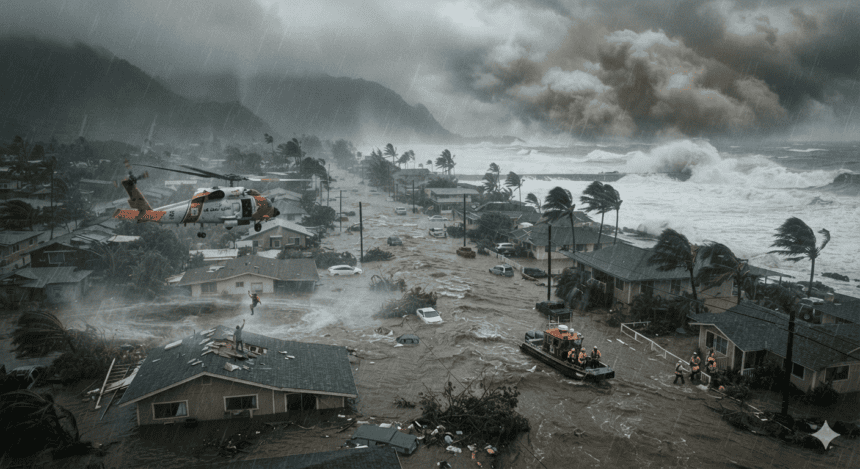
Hurricane Lala slammed into the Hawaiian Islands early Tuesday, dumping record rainfall and forcing emergency crews to scramble as flash floods swept through low-lying residential streets. The storm, packing sustained winds of 95 mph, has left thousands without power and turned quiet mountain streams into destructive torrents.
The National Weather Service issued an urgent flash flood emergency for the Big Island and parts of Maui, warning that the worst is yet to come. Rainfall rates in some regions hit six inches per hour, overwhelming drainage systems and turning major thoroughfares into impassable rivers.
“The water rose in minutes,” said Kimo Kalani, a resident in Hilo who had to evacuate his home as the Wailuku River breached its banks. “We’ve seen storms before, but nothing that moved this fast or hit this hard.”
Governor Josh Green declared a state of emergency shortly before dawn, mobilizing the National Guard to assist with water rescues. “Our priority is saving lives,” Green told reporters from the state’s emergency operations center. “If you are in a flood-prone area, do not wait for a knock on your door. Move to higher ground now.”
The storm’s path has been erratic, making it difficult for forecasters to predict exactly which communities will bear the brunt of the next surge. Utility providers report that high winds have downed power lines across the island chain, leaving nearly 80,000 customers in the dark. Repair crews remain grounded until conditions stabilize, meaning power outages could drag on for days.
The economic impact is already mounting. Flights into Honolulu and Kona have been canceled indefinitely, stranding thousands of tourists and disrupting vital supply chains for the islands. While Hawaii is no stranger to tropical systems, the intensity of this event has stretched local resources thin.
Emergency management teams are monitoring the storm’s trajectory, which is expected to slowly drift north over the next 24 hours. The rain will likely persist long after the wind speeds drop, keeping the threat of landslides and mudslides high across the volcanic terrain.
For now, the state remains in a holding pattern. Residents are hunkered down, waiting for the rain to stop so they can assess what’s left of their homes once the water finally recedes.