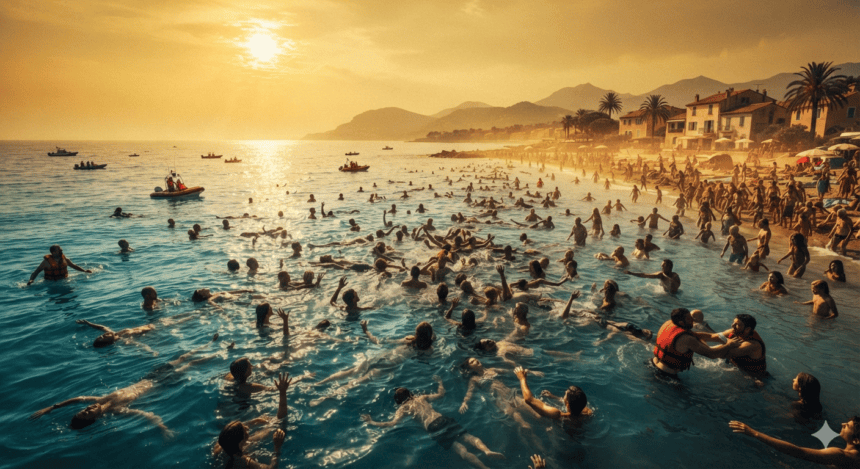
PARIS — Summer in France has turned lethal. Public health authorities confirmed this week that more than 300 people have drowned since the start of the season, a sharp uptick fueled by record-breaking heatwaves that sent millions flocking to unmonitored waters.
The numbers are grim. According to Santé Publique France, the national health agency, the spike in fatalities coincides with back-to-back heat spikes that pushed temperatures well into the high 30s Celsius. When the mercury rises, the urge to cool off often overrides basic water safety.
“The heat makes people reckless,” said Marc Lefebvre, a veteran lifeguard on the Atlantic coast. “They see a river or a lake and they don’t think about the currents, the temperature shock, or the lack of supervision. By the time they realize they’re in trouble, it’s often too late.”
The data paints a clear, if sobering, picture. A large portion of these incidents occurred in rivers and lakes rather than supervised beaches. These “wild” swimming spots lack the eyes of professional lifeguards, turning a quick dip into a life-or-death struggle within minutes.
Authorities are scrambling to contain the crisis. Local prefectures have ramped up patrols and launched aggressive public awareness campaigns, but the sheer volume of people seeking relief from the heat is stretching emergency resources to their breaking point.
This isn’t just a matter of poor swimming skills. Cold-water shock—even in the middle of a heatwave—remains a silent killer. Jumping into a river when your body is overheated can trigger an involuntary gasping reflex, leading to immediate water inhalation and panic.
The government’s message is blunt: ignore the warning signs at your own peril. With temperatures forecast to remain high through the end of the month, officials are bracing for the toll to climb even further.
For now, the advice from the interior ministry is simple: stick to the pools where the whistles are blowing, and stay out of the water where there’s no one to pull you out.