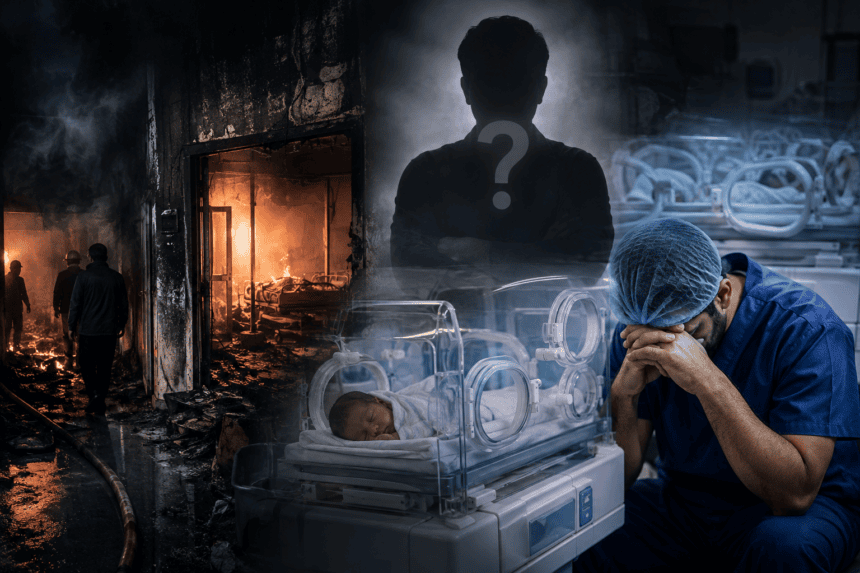
The fire at the Pakistan Institute of Medical Sciences (PIMS) newborn unit has left more than just scorched equipment in its wake. It has left three families grieving and a hospital administration facing a firestorm of scrutiny over the safety of its most vulnerable patients.
The blaze, which broke out late Tuesday night in the neonatal intensive care unit (NICU), forced an emergency evacuation of dozens of infants. While staff managed to move most to safety, three newborns died during the chaotic transfer.
For the hospital’s Executive Director, the disaster is a direct indictment of oversight. Parents and medical staff alike are asking why a high-dependency ward—a place where infants are tethered to life-support systems—lacked an immediate, fail-safe response to electrical failures.
Preliminary reports point to a short circuit in the ventilation system. The equipment, according to several senior nurses who spoke on condition of anonymity, had been flagged for maintenance issues months ago. They claim the administration prioritized budget cuts over critical infrastructure upgrades, leaving the NICU running on aging, overloaded circuits.
The Executive Director, who has kept a low profile since the incident, issued a brief statement promising a “transparent inquiry.” But for the families waiting outside the ward, an inquiry is a hollow gesture.
“They told us the hospital was the safest place for our child,” said one father, who spent hours searching through different wards to locate his infant after the smoke filled the hallways. “They didn’t tell us the life-support machines were hazards waiting to trip.”
This isn’t the first time PIMS has faced criticism for its management. The facility has long struggled with a reputation for bureaucratic inertia, where administrative bottlenecks often delay the procurement of basic medical supplies. This tragedy, however, elevates those systemic failures from a matter of convenience to a matter of life and death.
Health ministry officials have suspended two junior technicians, but the focus remains on the executive suite. Critics argue that holding low-level staff accountable ignores the reality that the hospital’s leadership failed to ensure a fire-suppression protocol for a ward where patients are physically unable to evacuate themselves.
Until the investigation concludes, the NICU remains partially shuttered, and the trust between the capital’s largest public hospital and the public it serves has been effectively severed. For the parents who lost their children, no bureaucratic inquiry can replace the lives lost to a preventable disaster.