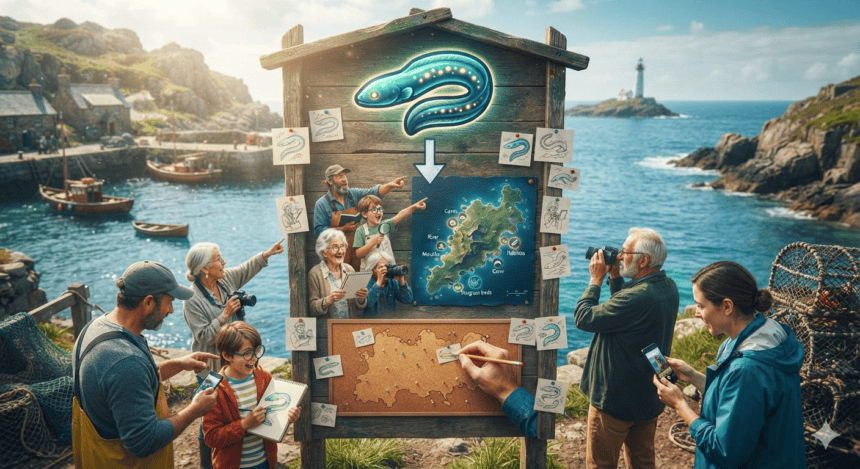
ST. MARY’S, Isles of Scilly — Wildlife officials are asking islanders to keep a sharp eye on local waterways, hoping to track the rare and increasingly elusive European eel.
The Isles of Scilly Wildlife Trust issued the call this week, asking residents to log any sightings of the snake-like fish. The species, which has seen its population plummet by more than 90% across Europe since the 1970s, remains notoriously difficult to monitor.
The eels are a biological mystery. They begin their lives in the Sargasso Sea, thousands of miles away, before drifting across the Atlantic to mature in freshwater streams and coastal lagoons. By the time they reach the Scilly Isles, they are often difficult to spot, preferring to hide in silty riverbeds and dark, submerged crevices.
“We’re essentially looking for a ghost,” said a trust representative. “They are masters of concealment, but they are here. We just need the public to help us map where.”
The decline is linked to a brutal combination of habitat loss, climate-driven changes to ocean currents, and parasitic infections. Because the species is critically endangered, every sighting provides vital data on whether local habitats are effectively supporting their survival.
The trust isn’t asking for physical contact. Instead, they want photos and precise location data. They warn that the eels are sensitive to disruption; disturbing their hiding spots can do more harm than good.
For the islanders, the request is a reminder of the fragile ecosystem right in their backyard. If the data from these sightings proves the local population is stabilizing, it could shift how the trust manages the islands’ inland water systems.
If you spot one, leave the eel where it is—and reach out to the Wildlife Trust with the details. Your report might be the missing piece in a migration puzzle that has baffled scientists for decades.