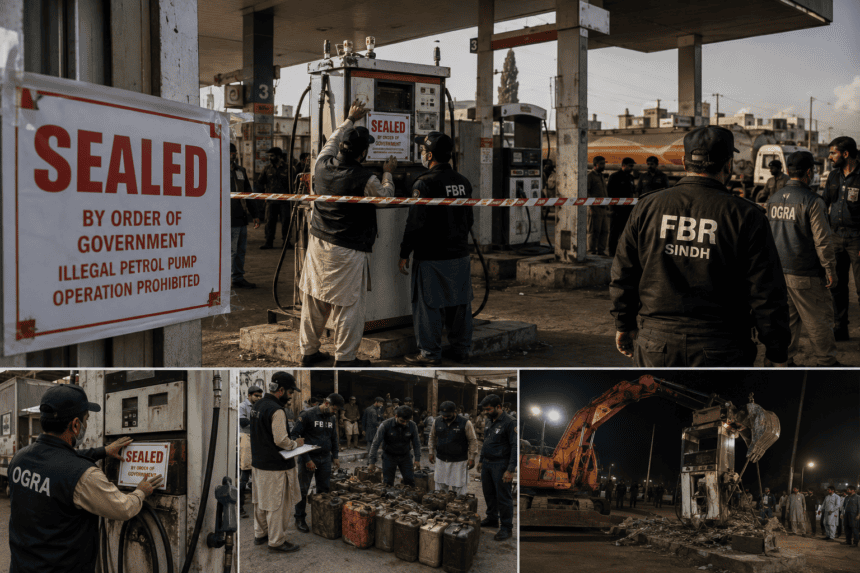
The government has launched a sweeping crackdown on illegal petrol pumps across the country, aiming to dismantle the sprawling network of smuggled fuel that has undercut legitimate businesses and drained national revenue. Officials confirmed that dozens of unlicensed stations were sealed in the first 48 hours of the operation.
The move follows a directive from the petroleum ministry to provincial authorities, marking a shift in how the state handles the black market. For years, these roadside pumps have operated in plain sight, selling cheaper, low-quality fuel often siphoned from border regions. By bypassing taxes and quality checks, they’ve managed to maintain prices that legal retailers simply cannot match.
Legitimate fuel station owners have long complained that this shadow economy is killing their margins. “We pay the taxes, we maintain the safety standards, and we lose customers to a guy with a tank in a backyard,” said one Karachi-based dealer who requested anonymity for fear of retaliation.
The enforcement teams—comprising district administration, police, and petroleum regulatory officials—are targeting not just the pumps, but the supply chains behind them. Authorities are seizing storage tanks, pump machinery, and tanker trucks found at sites lacking proper certification.
Despite the crackdown, the challenge remains significant. Smuggled fuel is deeply entrenched in the local economy, particularly in border provinces where it serves as a primary source of income for thousands. Critics argue that shutting down pumps without offering alternative livelihoods could spark unrest in vulnerable communities.
The government’s stance, however, is firm. Officials maintain that the unregulated fuel is not only a fiscal disaster but a safety hazard, citing the frequent, often deadly, fires at illegal storage sites.
As the operation enters its next phase, the focus will shift from simple closures to tracking the larger distribution rings. Whether this campaign results in a permanent disruption of the smuggling trade or merely pushes it further underground depends on the consistency of the enforcement. For now, the pumps are dark, and the state is looking to reclaim its share of the market.