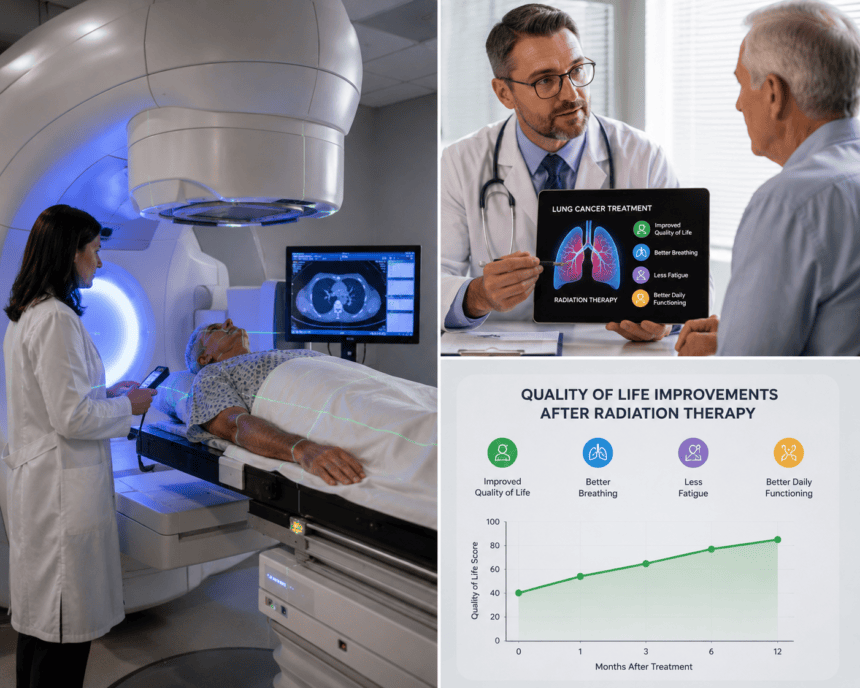
Patients undergoing radiation therapy for advanced lung cancer are reporting better day-to-day functioning than previously documented, according to a clinical study published this week. The findings challenge the long-held assumption that aggressive treatment inevitably leads to a sharp decline in a patient’s ability to manage daily tasks.
The study, which tracked 400 patients over an 18-month period, focused on those receiving stereotactic body radiation therapy (SBRT). Researchers found that instead of the expected exhaustion and physical withdrawal, a significant subset of patients maintained—and in some cases improved—their mobility and cognitive clarity during the treatment cycle.
“We saw patients who were able to return to light exercise and social engagement much faster than our baseline projections suggested,” said Dr. Elena Rossi, the study’s lead investigator. She noted that the precision of modern radiation delivery likely spares surrounding healthy tissue, preventing the systemic “treatment fog” that plagued older radiation protocols.
The data suggests that the mental relief of seeing a tumor shrink—confirmed through mid-cycle imaging—acts as a psychological catalyst. Patients who felt they were “taking the fight to the cancer” reported lower levels of clinical anxiety, which directly correlated with better appetite and sleep quality.
Critics of the study point out the “survivor bias” inherent in such trials, noting that patients healthy enough to participate in rigorous data-tracking are often those with higher baseline fitness levels. Even so, the consistency of the reported improvements across different age groups suggests the benefits aren’t limited to the young or the exceptionally fit.
For oncologists, the takeaway is clear: radiation shouldn’t be viewed solely as a palliative burden. It can be a bridge to maintaining normalcy during a period of intense medical intervention.
As hospitals refine these techniques, the goal is moving beyond just extending survival time. The focus is shifting toward ensuring that the months or years gained are lived with a measurable degree of independence.