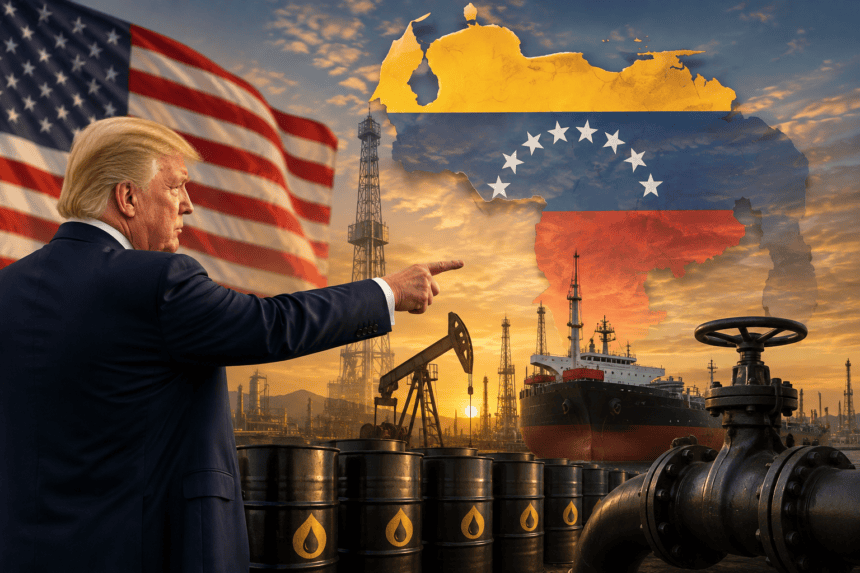
Donald Trump told a rally of supporters Tuesday that his administration secured a commitment for the United States to tap into 65 billion barrels of Venezuelan oil reserves. The claim, made without citing a specific document or formal agreement, marks a major pivot in his rhetoric regarding the South American nation.
The former president offered few specifics on how such a deal would function given the current U.S. sanctions regime against the Maduro government. Venezuela holds the world’s largest proven oil reserves, but years of state mismanagement, underinvestment, and international isolation have kept production at a fraction of its potential.
Trump framed the arrangement as a move to lower domestic fuel costs. He suggested that U.S. involvement would unlock the country’s crude output, which has struggled to recover since the collapse of the national oil company, PDVSA.
Energy analysts remain skeptical. Even with a theoretical political agreement, the physical infrastructure required to extract and export that volume of oil is in a state of decay. Rebuilding the necessary pipelines, refineries, and drilling equipment would take years of investment and billions of dollars in capital—none of which is currently available under existing U.S. policy.
The Venezuelan government has not confirmed any such agreement, and the White House has yet to comment on the claim.
For the U.S. energy sector, the prospect of Venezuelan oil remains a double-edged sword. While it could theoretically stabilize global supply, it would also require a complete reversal of long-standing foreign policy that has sought to distance Washington from Caracas.
If the deal is as concrete as Trump suggests, it would represent the most significant shift in Western Hemisphere energy policy in decades. For now, it remains a campaign promise waiting for a reality check.