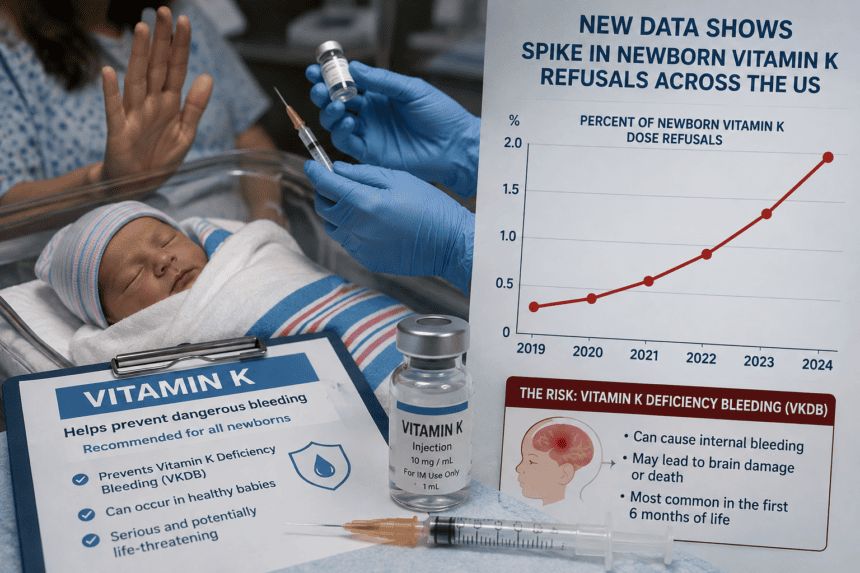
Newborns across the United States are facing a preventable health crisis as more parents decline the standard Vitamin K shot shortly after birth. Pediatricians report a sharp rise in “late-onset” Vitamin K deficiency bleeding—a rare but potentially fatal condition that occurs when infants lack the clotting factors necessary to stop internal hemorrhaging.
For decades, the intramuscular injection has been a routine part of newborn care. Vitamin K is essential for blood coagulation, and infants are born with naturally low levels. Without the supplement, babies are vulnerable to sudden, severe bleeding, particularly in the brain or gastrointestinal tract.
The trend stems from a mix of vaccine hesitancy and misinformation circulating in parenting forums and social media. Many parents mistakenly conflate the necessary vitamin supplement with elective vaccines, or fear the injection contains toxic additives. Pediatricians say the pushback is no longer confined to specific geographic pockets; it has become a nationwide challenge in clinical settings.
“We are seeing cases that simply shouldn’t exist anymore,” said one neonatologist at a major children’s hospital. “When a parent refuses the shot, they aren’t just making a personal choice—they are leaving their child unprotected against a condition that can cause permanent brain damage in a matter of hours.”
The clinical reality is stark. According to data from the Centers for Disease Control and Prevention (CDC), the risk of severe bleeding is 81 times higher in infants who do not receive the injection compared to those who do. While oral versions of the vitamin exist, they are less effective, require multiple doses, and are often missed by parents once they leave the hospital environment.
Medical associations are now changing how they approach the conversation. Instead of treating the injection as a routine formality, doctors are being advised to hold detailed, pre-birth counseling sessions to address parental concerns before the delivery room.
The consequences of refusal are rarely immediate, which complicates the decision for parents. A baby may seem perfectly healthy for weeks before suddenly suffering a catastrophic bleed. By that point, the medical intervention required is invasive, expensive, and carries no guarantee of a full recovery.
As the refusal rate climbs, hospitals are revisiting their consent policies. Some institutions now require parents to sign detailed waivers acknowledging they understand the specific risks of intracranial hemorrhage—a move designed to ensure families grasp the gravity of the decision before the baby is even born.