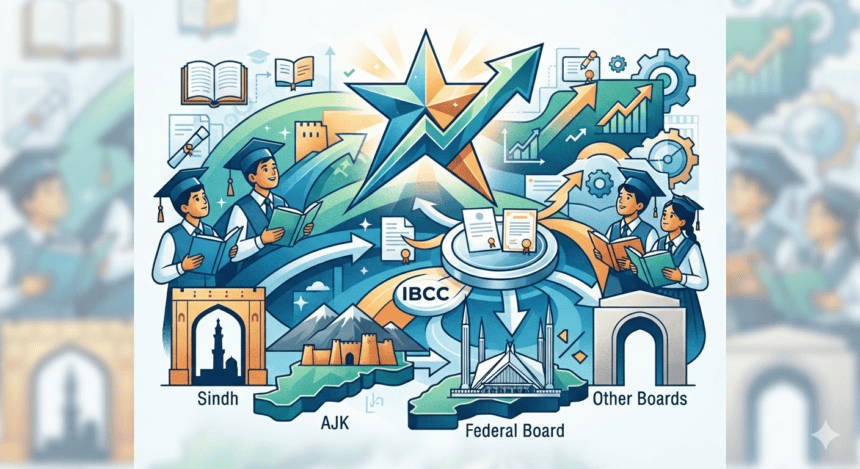
The Inter-Board Committee of Chairmen (IBCC) has officially confirmed a nationwide shift in how students are evaluated. Starting this academic cycle, traditional numerical marks are being replaced by a standardized grading system across federal, provincial, and AJK boards.
The transition aims to minimize the intense competition for “extra marks” that has long defined the country’s high-stakes examination culture. Education officials argue that the move will reduce the psychological burden on students, shifting the focus from perfect scores to broader competency levels.
Under the new framework, results will no longer feature raw scores. Instead, students will receive letter grades—A++, A+, A, and so on—alongside a Grade Point Average (GPA). This alignment brings Pakistani secondary and higher secondary education closer to international standards, where relative performance and grade bands hold more weight than a single digit difference.
The policy change follows years of debate regarding the “rat race” of the marking system, where the difference between an A and an A+ could be a single mark. Critics of the old system often pointed to the lack of transparency in paper re-checking and the subjective nature of examiners. Proponents believe the new grading bands will provide a more accurate reflection of a student’s academic standing while curbing the pressure to memorize content for marginal gains.
Despite the structural shift, the implementation remains a logistical challenge. Boards are currently updating their software and training staff to ensure the conversion of raw marks into these new grade bands remains consistent. There is also the matter of university admissions; institutions will now need to recalibrate their merit criteria to accommodate GPA-based rankings rather than the traditional percentage-based merit lists.
While the IBCC has set the policy in motion, the success of this transition rests on how quickly students and parents adapt to a system where a “numerical score” no longer tells the whole story. The move is a significant departure from decades of tradition, signaling an attempt to modernize an education system that has struggled to move past rote learning.
For now, the boards are focused on the upcoming examination cycles, marking the end of the era of the “top position holder” as the country has known it.